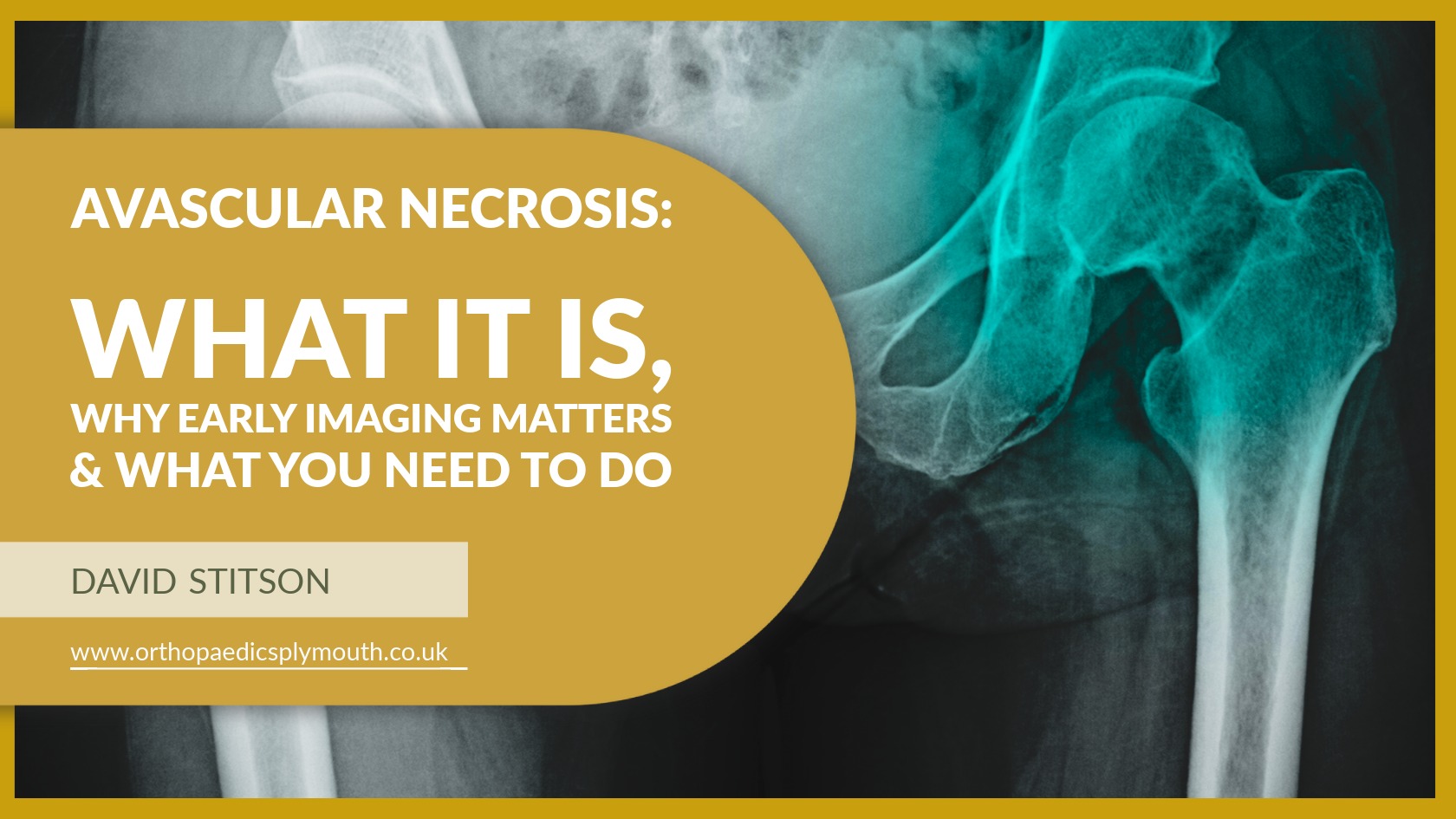
A diagnosis of avascular necrosis (AVN) can feel alarming, but understanding the condition and the range of treatments now available can make all the difference in planning your next steps.
If you are based in the Southwest and considering private orthopaedic treatment, here’s what you need to know.
Avascular necrosis typically affects the epiphysis of long bones at weight-bearing joints, with the hip being the most common site. The knee, shoulder and ankle can also be affected.
What Is Avascular Necrosis?
Avascular necrosis, also called osteonecrosis, occurs when the blood supply to a section of bone is disrupted, causing the bone tissue to die.
Contents
ToggleIt typically affects the epiphysis of long bones at weight-bearing joints, with the hip being the most common site. The knee, shoulder and ankle can also be affected. Without treatment, the affected area can weaken and eventually collapse, leading to progression of the bony infarction, cortical collapse and secondary osteoarthritis resulting in significant pain and joint dysfunction.
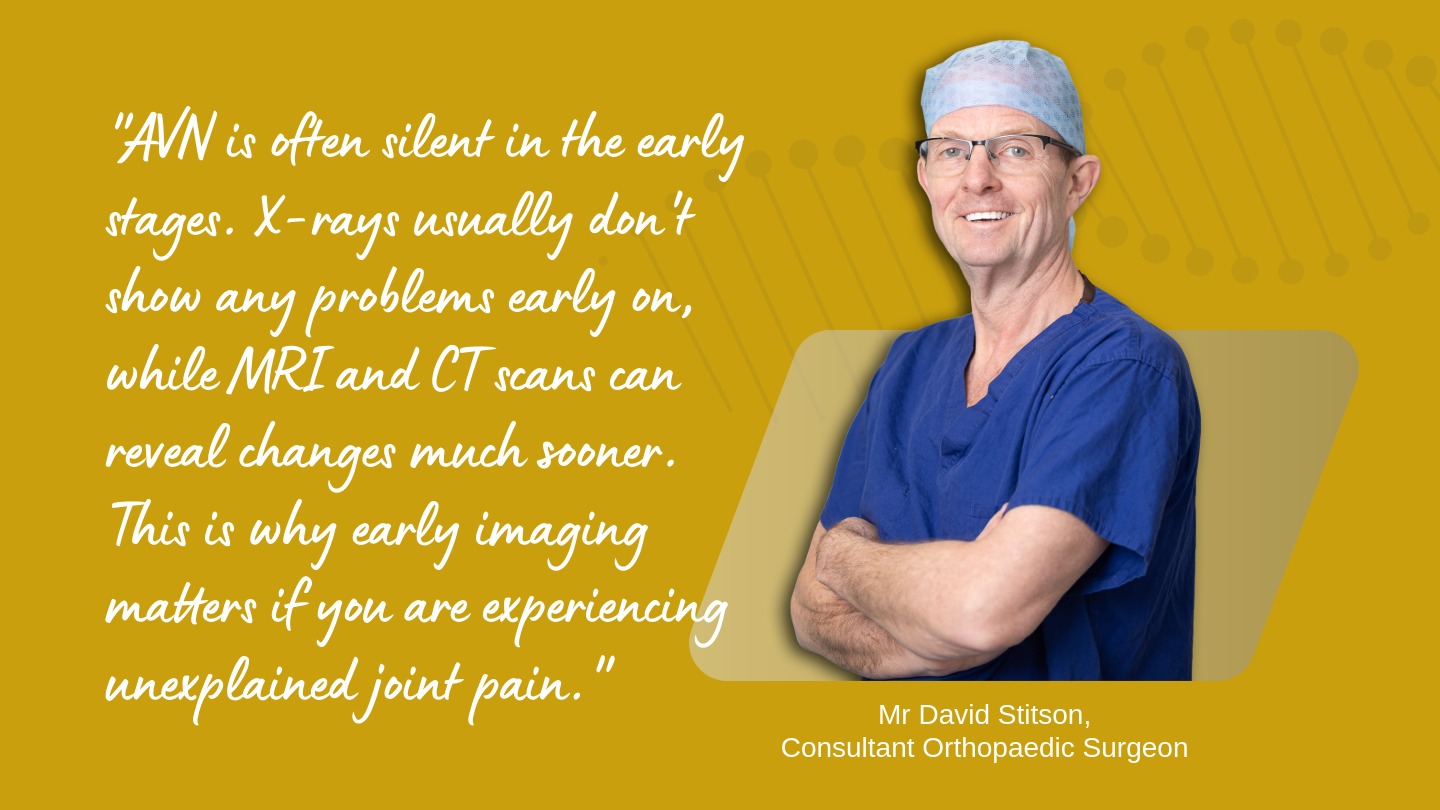
The tricky part is that AVN is often silent in the early stages. X-rays usually don’t show any problems early on, while MRI and CT scans can reveal changes much sooner. This is why early imaging matters if you are experiencing unexplained joint pain.
Why Early Diagnosis Matters
Early intervention can save affected joints and potentially avoid the need for joint replacement altogether.
Once the disease reaches an advanced stage, however, the course becomes largely unaffected by activity modification, and surgery becomes the main option. This is one of the strongest arguments for seeking a prompt private consultation and imaging if you suspect something is wrong, rather than waiting on long NHS imaging queues.
Non-Surgical Treatment Options for lower joints
For early-stage AVN, particularly where less than 15% of the bone segment is affected and its is away from weight-bearing surfaces, conservative measures such as pain relief medication and limited weight-bearing with crutches can be a reasonable initial approach.
Other non-surgical approaches your consultant might discuss include:
- Medication – over-the-counter anti-inflammatories such as ibuprofen or naproxen can help manage early symptoms. While osteoporosis drugs and cholesterol-lowering medication have also been explored, evidence that these slow AVN progression is mixed.
- Physiotherapy and rehabilitation – tailored exercise programmes to maintain joint mobility and reduce strain.
- Ultrasound-guided injections – these are offered by some specialist centres as part of a broader non-surgical management plan.
- Activity modification – reducing impact on the affected joint, often with the use of crutches or supports.
It is worth noting that no medical treatment has yet been proven to definitively prevent or halt the underlying disease process. As such these approaches are generally about symptom management and buying time while monitoring progression.
Private Surgical Treatment Options in Plymouth
When non-surgical measures aren’t enough or the disease has progressed, several surgical options exist depending on the joint involved and the stage of disease:
Core decompression
Mr Stitson removes part of the inner layer of bone, which reduces pain and can stimulate the growth of healthy bone tissue and new blood vessels.
Bone grafting
Healthy bone is transplanted from elsewhere in the body to strengthen the affected area.
Osteotomy (bone reshaping)
A wedge of bone is removed near the joint to shift weight away from the damaged area, which can help delay the need for joint replacement.
Joint replacement
For more advanced cases, replacement of the hip or knee, may offer the best outcome. At several years’ follow-up, studies have shown significant improvements in function of the replaced joint.

What this means If you are considering private treatment in the South West
Choosing private care often means faster access to MRI imaging, a quicker specialist consultation and more time to discuss the full range of options — including newer regenerative therapies that may not be widely available on the NHS.
Given that around 72% of patients with AVN in one hip go on to develop it in the other within two years, ongoing monitoring of both joints is also something worth raising with your consultant from the outset.
If you have recently been diagnosed or are experiencing unexplained joint pain, the most valuable first step is a consultation with an orthopaedic specialist who can stage your condition accurately and talk through which of these options — conservative, surgical, or regenerative — fits your circumstances best.
Take the Next Step…
If joint pain is stopping you from doing the things you love, book a consultation with Mr Stitson to discuss your options.
– Consult Your GP: If you are experiencing joint pain and are considering surgery, start by booking an appointment with your GP. They will be able to refer you to a specialist if needed.
– Understand Your Options: There are the key avenues you can explore to speed up your access to joint surgery contributing to a swifter recovery and getting you back on your feet sooner.
– Do Your Research: Familiarise yourself with different types of joint replacement procedures and what each one involves.
– Speak with Mr Stitson: Book a consultation with David Stitson, a consultant orthopaedic surgeon based in Plymouth, to discuss what might be the best approach for you personally. He will provide detailed information specific to your situation.
– A consultation helps you understand:
- What is causing your pain
- Whether joint surgery is appropriate
- Alternatives to surgery
- Expected recovery and outcomes
Surgery may sound daunting, but for many, it provides much-needed relief and the chance to regain mobility. This step can be pivotal in improving your quality of life, helping to reduce pain and stiffness in your hip or knee, dramatically.
By addressing the underlying issues, joint surgery can pave the way for a more active lifestyle, allowing you to return to the activities you love without the constant concern of hip or knee pain holding you back.
Taking action now may help you regain confidence, mobility and quality of life.
Get Private Orthopaedic Surgery in Plymouth in just 4-6 weeks
⇒ Consultation in 7 days or less
⇒ Consultation to surgery, 4-6 weeks
About Hip Surgery
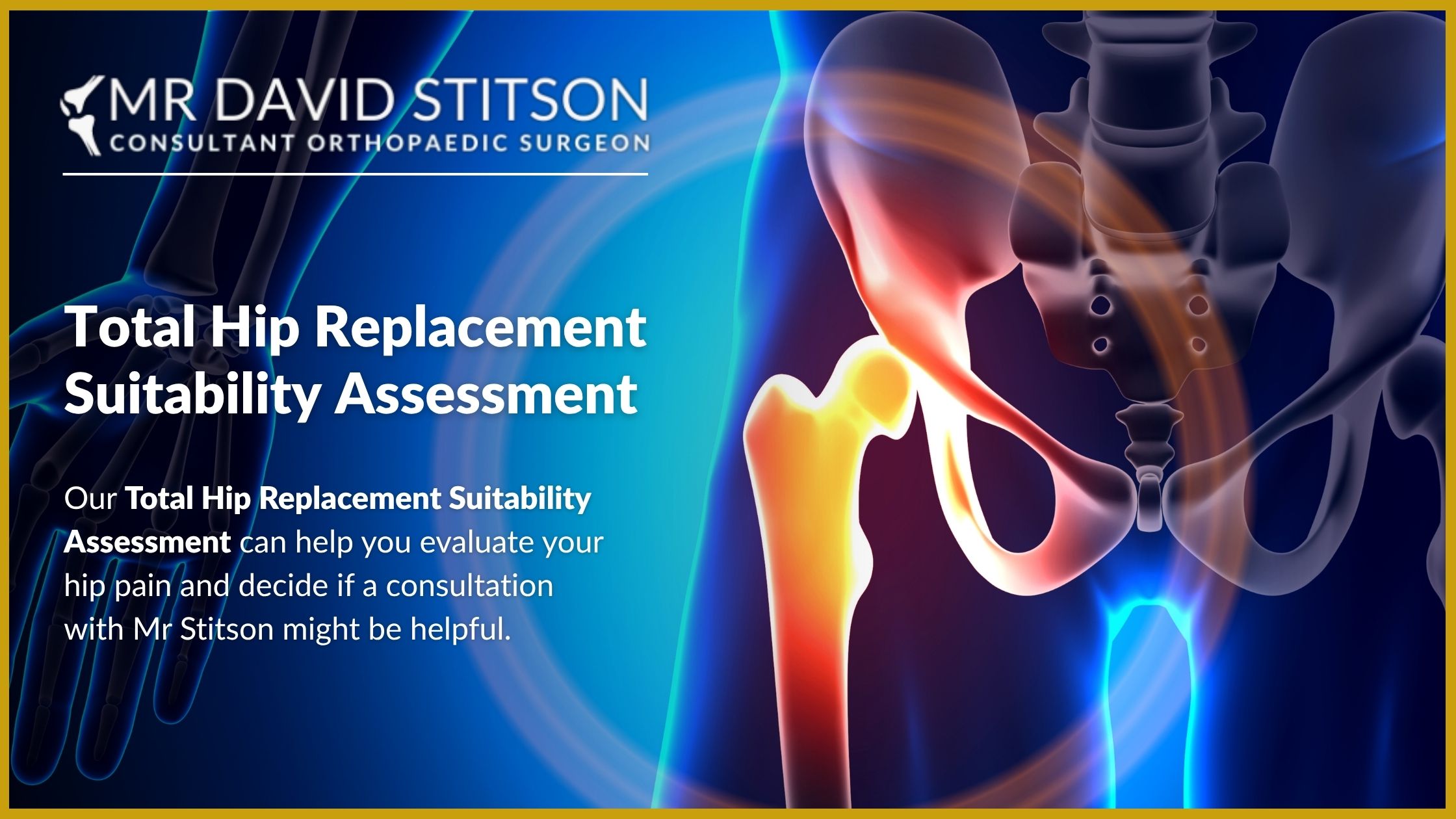
Total hip replacement surgery replaces the worn-out painful and stiff hip joint with a new prosthetic joint. This procedure is normally performed under spinal anaesthesia and is commonly followed by a night or two in the hospital. Day-case hip replacement surgery may be an appropriate option for you.
About Knee Surgery
Knee replacement surgery replaces the worn out, painful and stiff knee joint with a new prosthetic joint. This procedure which may be a partial or a total replacement is normally performed under spinal anaesthesia and is usually followed by a night or two in the hospital. Day-case knee replacement surgery may be an appropriate option for you.
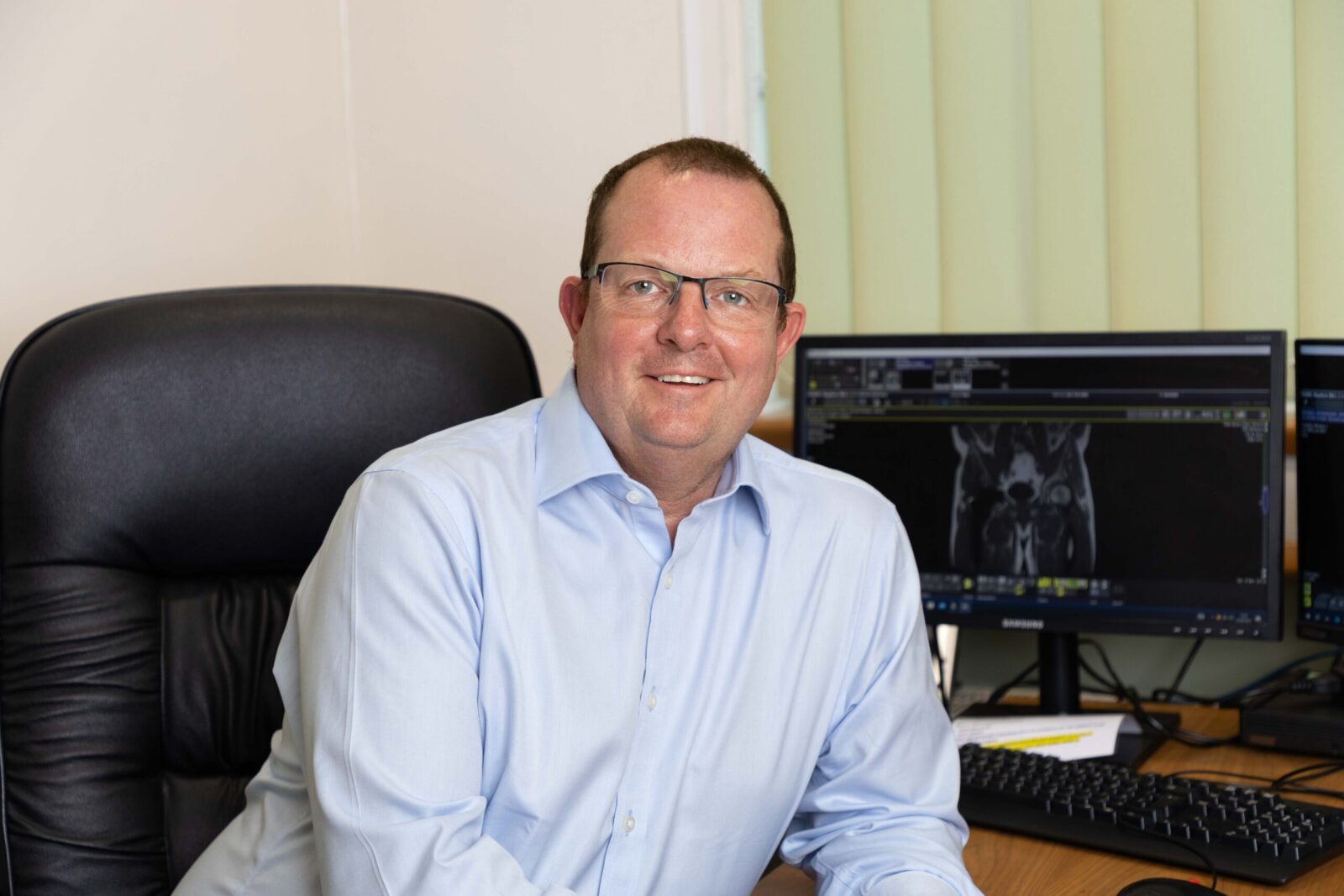
About Mr Stitson
David Stitson is a Plymouth-based Consultant Trauma and Orthopaedic Surgeon. Trained both in the UK and internationally, he has worked in medicine for more than 20 years for the NHS, for the Royal Air Force and in private practice. Mr Stitson operates privately at the Nuffield Health Hospital, Plymouth.

Are you ready to Take the Next Steps to improve your mobility?
Living with constant joint pain is not something you have to accept as part of ageing. Many people in their late 60s and 70s find that a private joint replacement restores their mobility and transforms their quality of life.
📞 To discuss your symptoms and explore whether joint replacement surgery is the right option for you, contact Mr David Stitson, Consultant Orthopaedic Surgeon, at the Nuffield Hospital, Plymouth.
- Call: 01752 761818
- Visit: www.orthopaedicsplymouth.co.uk
- Email: enquiries@orthopaedicsplymouth.co.uk
Take the first step towards a more comfortable, active life today.
The Nuffield Plymouth CQC Rating
The Nuffield Hospital has a history that spans over half a century and has built a reputation for high standards of care, professionalism and expertise in delivering health services. They aim for continuous quality improvement in everything they do.
Active Quality and Governance programmes are in place at the Nuffield Hospital Plymouth. As part of this, the hospital is inspected by independent healthcare regulators to ensure it meets the fundamental standards of quality and safety as determined by the regulating body (CQC).
In the most recent inspection, Plymouth Nuffield Hospital was rated as ‘Good’ overall, however, the surgical element of the inspection was rated as ‘Outstanding’. The hospital was referred to as:
“Outstanding in effective and caring, and
Good in safe, responsive and well-led.”