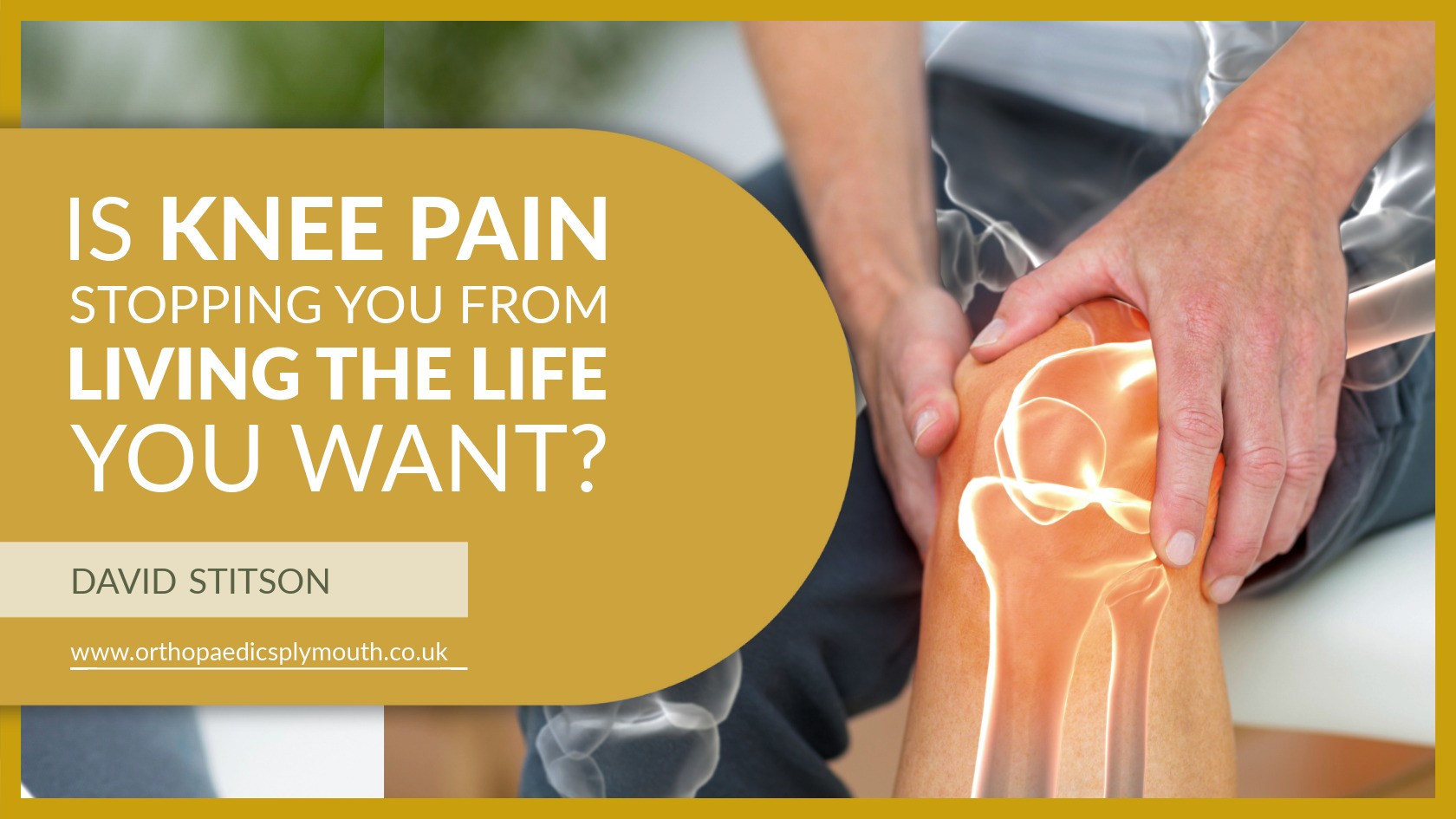
Knee pain rarely starts as a dramatic problem.
For most people, it begins quietly — a bit of stiffness in the morning, discomfort on stairs or soreness after a longer walk.
Contents
ToggleOver time, those small limitations grow. Walks become shorter. Hobbies become harder. Social plans get declined. Sleep becomes disturbed. Gradually and without realising it, life becomes smaller.
If you are wondering whether your knee pain is now affecting your quality of life, this article will help you recognise the signs and understand what you can do next.
Knee arthritis and joint damage do not just affect movement — they affect independence, confidence, fitness and mental wellbeing.
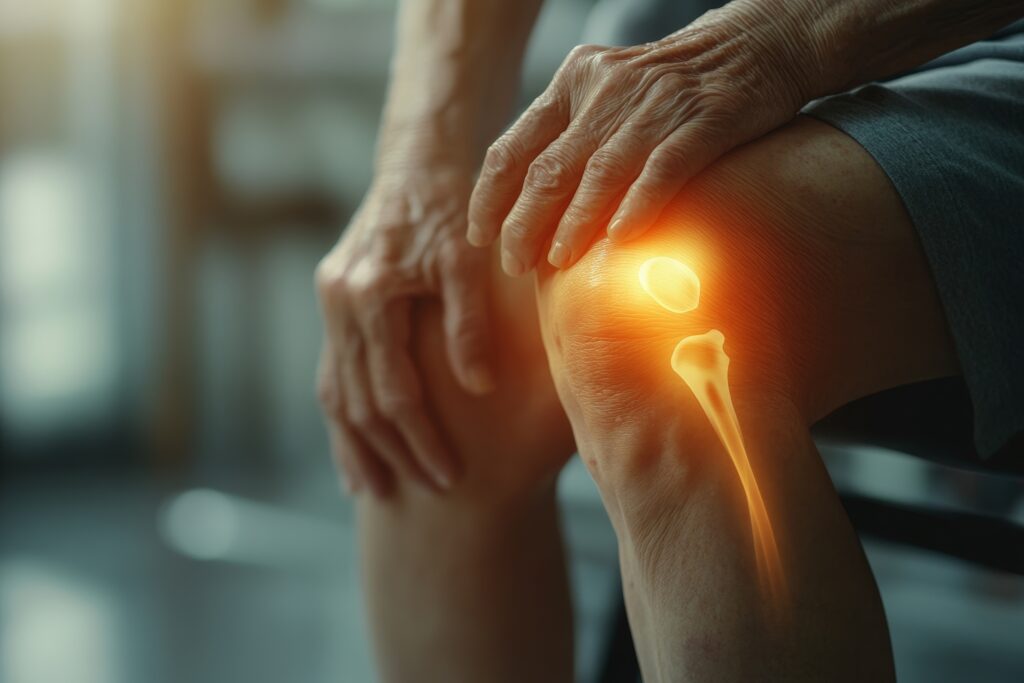
Knee Pain Isn’t Just About the Knee
Many people tolerate knee pain for years because they assume:
- “It’s just age.”
- “Everyone gets aches and pains.”
- “I’ll live with it.”
- “Surgery is a last resort.”
But knee arthritis and joint damage do not just affect movement — they affect independence, confidence, fitness and mental wellbeing.
People often find themselves:
- Avoiding long walks
- Struggling on stairs
- Giving up sports or hobbies
- Declining social invitations
- Feeling more tired due to poor sleep
- Gaining weight because activity becomes harder
These lifestyle changes can creep in slowly, until one day you realise you are no longer doing the things you enjoy.
5 Common Signs Knee Pain May Be Limiting Your Life
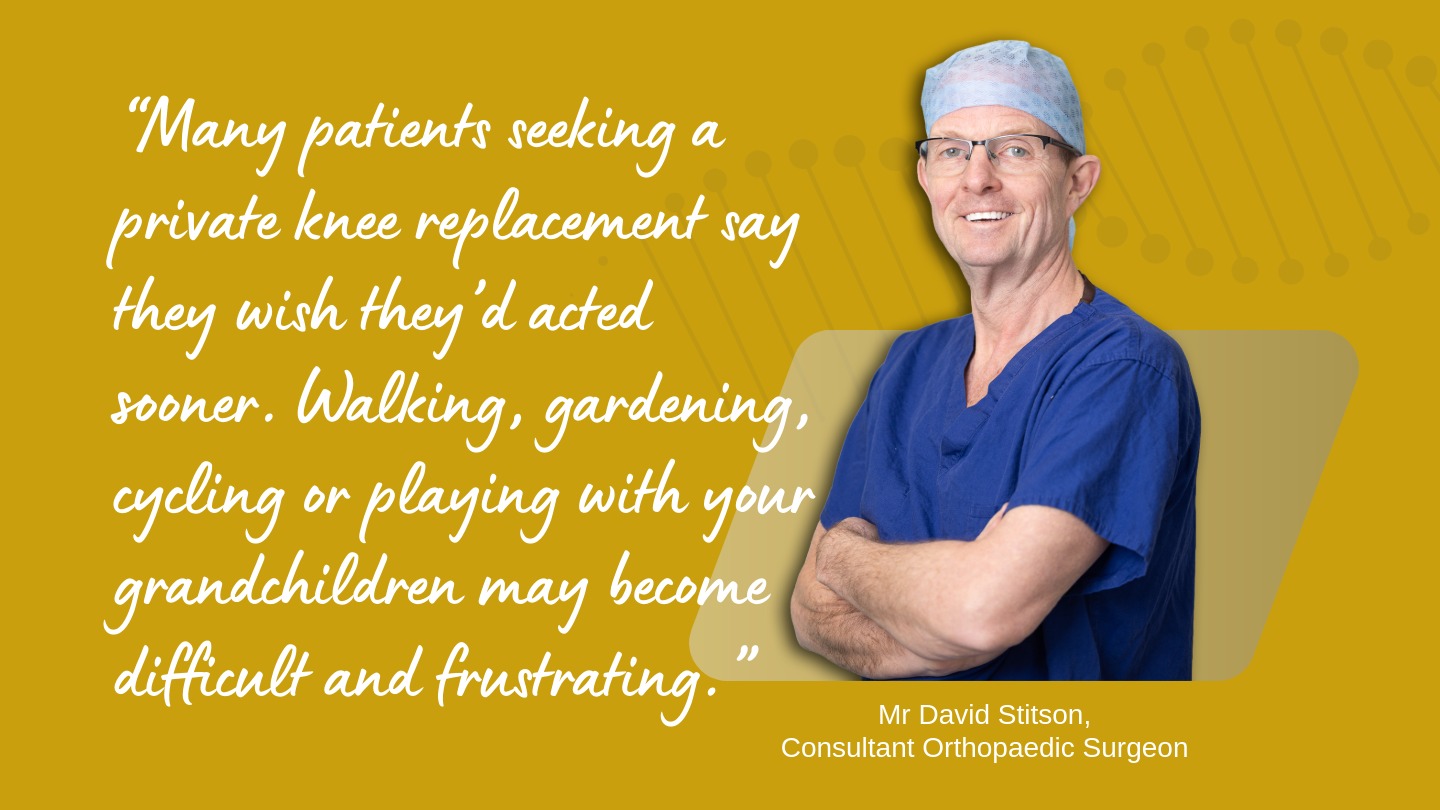
Many patients seeking private knee replacement say they wish they’d acted sooner.
Common warning signs include:
1. Daily activities are becoming difficult
- Walking distance is getting shorter
- Stairs are painful or slow
- Getting in and out of chairs is hard
- Shopping trips feel exhausting
2. Pain affects sleep
Night pain or discomfort when turning in bed is common in advanced knee arthritis.
3. Painkillers are needed regularly
If pain relief is becoming part of daily routine, the problem may be progressing.
4. You avoid activities you once enjoyed
Walking, gardening, travel, golf, cycling or playing with your children or grandchildren may become difficult.
5. Mood and wellbeing are affected
Chronic pain often leads to frustration, low mood or social withdrawal.
Why Do People Delay Knee Treatment?
People commonly delay seeing a specialist because:
- They think knee surgery should be avoided at all costs
- They worry recovery from their knee surgery will be too difficult
- They assume they are “too young” or “too old”
- They fear time off work or responsibilities
But, modern knee replacement surgery is highly successful and recovery pathways have improved significantly.
Many patients say:
“I wish I’d done it sooner.”
When Should You Consider Specialist Orthopaedic Advice?
You do not need surgery simply because you have knee pain. However, it is sensible to seek advice when:
- Pain persists despite physiotherapy or injections
- Walking becomes limited
- Sleep is disturbed
- Quality of life is reduced
- Independence is affected
- Daily activities become difficult
A consultation does not mean committing to surgery — it simply helps you understand options.
What Happens If You Ignore Knee Pain?
Left untreated, knee arthritis often progresses, leading to:
- Reduced mobility
- Muscle weakness
- Weight gain
- Loss of confidence walking
- Increased risk of falls
- Further joint strain
People often become less active overall, affecting heart health, fitness and mental wellbeing.
Knee Replacement: What Can It Improve?
A knee replacement aims to:
- Reduce or eliminate pain
- Improve walking ability
- Restore independence
- Improve sleep
- Help return to normal activities
- Improve quality of life
Most patients report significant improvement within months, with continued progress over the first year.
The Questions Worth Asking Yourself…
Rather than focusing purely on x-rays or age, ask yourself:
- Am I avoiding activities because of knee pain?
- Is my independence reducing?
- Is pain affecting sleep or mood?
- Am I living the life I want?
If knee pain is limiting your lifestyle, it may be time to explore solutions.
You Don’t Have to Just “Put Up with It”
Many people assume pain is inevitable with age. It isn’t.
Treatment options range from physiotherapy and injections to surgical solutions when needed. The important thing is understanding your options early.
The goal is not simply fixing a knee — it is helping you return to the life you enjoy.
Take the Next Step…
If knee pain is stopping you from doing the things you love, book a consultation with Mr Stitson to discuss your options.
– Consult Your GP: If you are experiencing knee pain and are considering surgery, start by booking an appointment with your GP. They will be able to refer you to a specialist if needed.
– Understand Your Options: There are the key avenues you can explore to speed up your access to knee surgery contributing to a swifter recovery and getting you back on your feet sooner.
– Do Your Research: Familiarise yourself with different types of knee replacement procedures and what each involves. Knowledge is power!
– Speak with Mr Stitson: Book a consultation with David Stitson, a consultant orthopaedic surgeon based in Plymouth, to discuss what might be the best approach for you personally. He will provide detailed information specific to your situation.
– A consultation helps you understand:
- What is causing your pain
- Whether knee surgery is appropriate
- Alternatives to surgery
- Expected recovery and outcomes
Surgery may sound daunting, but for many, it provides much-needed relief and the chance to regain mobility. This step can be pivotal in improving your quality of life, helping to reduce pain and stiffness dramatically.
By addressing the underlying issues, knee surgery can pave the way for a more active lifestyle, allowing you to return to the activities you love without the constant concern of hip pain holding you back.
Taking action now may help you regain confidence, mobility and quality of life.
Get Private Orthopaedic Surgery in Plymouth in just 4-6 weeks
⇒ Consultation in 7 days or less
⇒ Consultation to surgery, 4-6 weeks
About Knee Surgery
Knee replacement surgery replaces the worn out, painful and stiff knee joint with a new prosthetic joint. This procedure which may be a partial or a total replacement is normally performed under spinal anaesthesia and is usually followed by a night or two in the hospital. Day-case knee replacement surgery may be an appropriate option for you.

About Mr Stitson
David Stitson is a Plymouth-based Consultant Trauma and Orthopaedic Surgeon. Trained both in the UK and internationally, he has worked in medicine for more than 20 years for the NHS, for the Royal Air Force and in private practice. Mr Stitson operates privately at the Nuffield Health Hospital, Plymouth.

Are you ready to Take the Next Steps to improve your mobility?
Living with constant knee pain is not something you have to accept as part of ageing. Many people in their late 60s and 70s find that a private knee replacement restores their mobility and transforms their quality of life.
📞 To discuss your symptoms and explore whether knee replacement surgery is the right option for you, contact Mr David Stitson, Consultant Orthopaedic Surgeon, at the Nuffield Hospital, Plymouth.
- Call: 01752 761818
- Visit: www.orthopaedicsplymouth.co.uk
- Email: enquiries@orthopaedicsplymouth.co.uk
Take the first step towards a more comfortable, active life today.
The Nuffield Plymouth CQC Rating
The Nuffield Hospital has a history that spans over half a century and has built a reputation for high standards of care, professionalism and expertise in delivering health services. They aim for continuous quality improvement in everything they do.
Active Quality and Governance programmes are in place at the Nuffield Hospital Plymouth. As part of this, the hospital is inspected by independent healthcare regulators to ensure it meets the fundamental standards of quality and safety as determined by the regulating body (CQC).
In the most recent inspection, Plymouth Nuffield Hospital was rated as ‘Good’ overall, however, the surgical element of the inspection was rated as ‘Outstanding’. The hospital was referred to as:
“Outstanding in effective and caring, and
Good in safe, responsive and well-led.”