Have you been living with constant hip pain?
If you have been living with hip pain that is limiting your ability to walk, sleep or simply get on with daily life, you may have reached the point where hip replacement surgery is being discussed as an option.
Contents
ToggleIt is a hugely effective procedure and one of the most successful in all of orthopaedic procedures, but like any operation, the outcome depends not just on what happens in theatre, but on how well you prepare beforehand and recover afterwards.
Below are some practical tips to help you get ready, both physically and mentally, for hip replacement surgery.
Hip Replacement At a Glance
- Cost: £250 for your initial consultation, then hip replacement prices* start from £17,449
- Time: Typically 2 hours
- Stay: Approx. 2-4 days
- Where: Nuffield Health Plymouth Hospital, Derriford Road, Plymouth
- Referral: If you are paying for yourself, you can self-refer so you won’t necessarily need to see your GP first.
“Most people need some help for the first couple of weeks after surgery, particularly with tasks like shopping, laundry and getting to appointments.”
7 practical tips to help you get ready for hip replacement surgery
1. Get as fit as you reasonably can before your surgery
You don’t need to be an athlete, but going into hip replacement surgery in the best possible physical condition genuinely helps. Gentle, regular activity such as walking, swimming or exercises specifically for the hip and surrounding muscles, helps to maintain strength in the muscles that support the joint, which in turn supports a smoother, faster recovery.
If you smoke, cutting down or stopping in the weeks before surgery reduces the risk of complications and aids healing.
Maintaining a healthy weight where possible also reduces strain on the new joint and can lower surgical risk.
2. Sort out your home before you go into hospital
Recovery is much easier when your home is set up to help you, not hinder you. Before your admission date, it is worth:
- Moving frequently used items (kettle, plates, remote controls) to waist height so you are not bending or reaching
- Removing loose rugs and trailing cables that could cause a trip.
- Arranging a stable chair with good arm support and a firm cushion (low, soft sofas are hard to get out of).
- Considering a raised toilet seat and a shower stool, especially in the first few weeks (usually provided by the hospital).
- Preparing meals in advance or arranging help with cooking and shopping.
3. Plan your support network
Most people need some help for the first couple of weeks after surgery, particularly with tasks like shopping, laundry and getting to appointments (you are advised not to drive for 6-weeks). Think ahead about who can help with these things, and don’t be afraid to ask.
If you live alone, it is worth discussing this with your surgical team in advance, as they can advise on additional support or short-term care arrangements.
4. Understand what to expect on surgery day
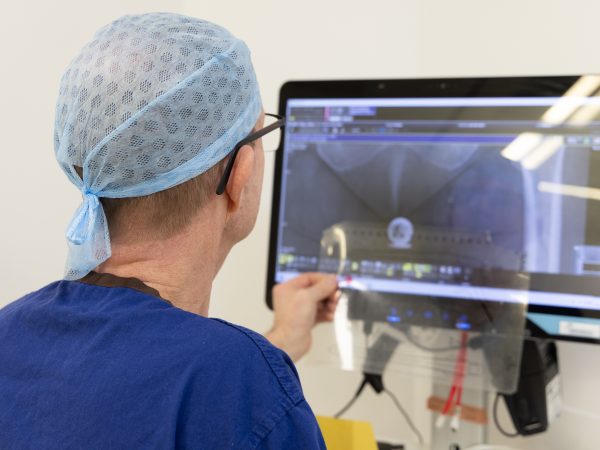
Knowing the what to expect on the day can ease a lot of pre-surgery anxiety. You will typically be asked to fast beforehand and you will meet with the anaesthetist to discuss the type of anaesthetic planned, including the use of spinal anaesthesia combined with sedation or a general anaesthetic and post-op pain relief options.
Many patients are up and taking their first steps, with support, within hours of surgery. Modern hip replacement protocols are designed to get you moving early, since this is one of the best things for a smooth recovery.
5. Pack sensibly for your hospital stay
A small bag with loose, comfortable clothing, flat non-slip shoes, any regular medication and basic toiletries is usually all that’s needed. Loose trousers or shorts that can easily slip over a healing hip are far easier to manage than anything tight-fitting.
6. Take pain relief and physiotherapy seriously
Staying ahead of pain, rather than waiting until it becomes severe, makes it much easier to engage with the physiotherapy exercises that are central to recovery. Your physiotherapy team will guide you through movements to restore strength and range of motion; sticking with these, even when you don’t feel like it, has a big impact on your long-term outcome.
7. Ask questions before your surgery
A good surgeon will welcome your questions. It is worth asking about the type of implant being used, expected recovery timeframes, any activity restrictions and what “red flag” symptoms should prompt you to get in touch after surgery. Feeling informed and confident going in tends to make the whole hip replacement experience less daunting.
Personalised care with Mr David Stitson at the Nuffield Hospital, Plymouth
Preparation is easier when you are working with a surgeon who takes the time to talk you through the process clearly and answer your questions honestly.
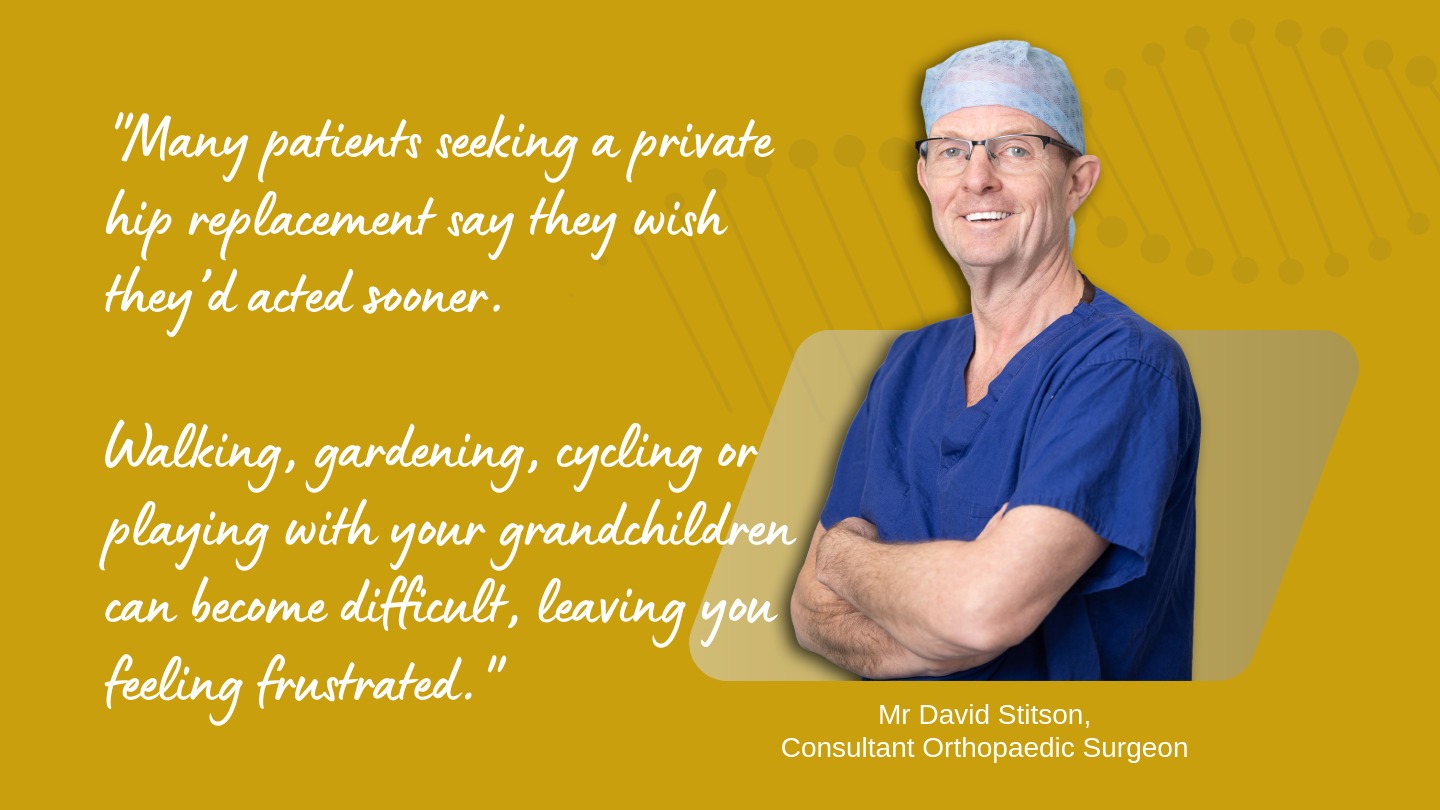
Mr David Stitson, Consultant Orthopaedic Surgeon, provides private hip and knee replacement surgery at the Nuffield Hospital in Plymouth, offering rapid diagnosis and a genuinely personalised treatment plan for every patient
Mr Stitson’s private practice covers the full range of lower limb joint care, from initial consultation through to hip and knee replacement and revision surgery, with the aim of helping patients regain mobility and get back to the activities they love as quickly and safely as possible.
If you are weighing up your options for hip replacement surgery in Plymouth and the Southwest, a private consultation is a good first step towards understanding your individual case and what to expect.
Why going private is a great idea
The NHS provides excellent care and private treatment isn’t the right choice for everyone, but if you are living with hip or knee pain and would rather not wait to find out what is causing it, a private consultation offers some definite advantages.
Faster access to a specialist
If you are paying for your own treatment, you can self-refer to see Mr Stitson directly. That means no waiting for a GP appointment first and a smoother, quicker route to an answer. Booking your appointment typically takes about a week.
More time, and a consultant who knows your case
A 30 minute appointment gives you space to explain your symptoms properly and ask everything you want to. And the surgeon you meet at your consultation is the surgeon who will carry out your procedure, should you need one.
Clear, upfront pricing
Mr Stitson’s published surgical prices cover the procedure itself, your anaesthetic, your hospital stay and your aftercare. There are no surprises, which makes planning far easier.
Flexible ways to pay
If surgery is recommended, you can spread the cost through Chrysalis Finance and the Nuffield Hospital, with 6, 10 or 12 interest-free monthly instalments (representative 0% APR), or longer-term options at 14.9% APR. Finance is subject to status and terms.
Everything in one place
Your consultation, any investigations and your surgery are all organised through the Nuffield Health Plymouth Hospital, so your care remains joined up from your first appointment to your recovery.
Put simply, a private consultation is a low-commitment first step: one appointment, one fee and a clear plan.
When to seek specialist advice
Consider booking a consultation if:
- Hip or knee pain is making walking, stairs, sleep or everyday activities difficult
- Your joint is stiff, swollen or has started to lock or give way
- Rest, pain relief or physiotherapy haven’t improved things
- You have been told you have arthritis and want to understand your options
- You have had a previous joint replacement that is causing problems
Seek urgent medical help (call 111 or go to A&E) if you have sudden, severe joint pain, can’t put weight on your leg after an injury or have a hot, red, swollen joint with a fever.
Private Orthopaedic care for the South West
Whether you live in Plymouth itself or are travelling from elsewhere in Devon, Cornwall or Somerset – from Torquay and Exeter to Truro and Taunton – Mr Stitson’s consultations at the Nuffield Health Plymouth Hospital offer a convenient base for expert hip and knee care, close to home.
Take the first step
If hip or knee pain is holding you back, a consultation with Mr Stitson could give you the answers you have been waiting for – and a plan to get you back to the activities you love.
Book your initial consultation
- Call: 01752 761818
- Email: enquiries@orthopaedicsplymouth.co.uk
- Online: Book a consultation with Mr Stitson
- Where: Nuffield Health Plymouth Hospital, Derriford Road, Plymouth, PL6 8BG
Is it time to see an Orthopaedic specialist? Get Private Orthopaedic Surgery in Plymouth in just 4-6 weeks
⇒ Consultation in 7 days or less
⇒ Consultation to surgery, 4-6 weeks
The Nuffield Plymouth CQC Rating
The Nuffield Hospital has a history that spans over half a century and has built a reputation for high standards of care, professionalism and expertise in delivering health services. They aim for continuous quality improvement in everything they do.
Active Quality and Governance programmes are in place at the Nuffield Hospital Plymouth. As part of this, the hospital is inspected by independent healthcare regulators to ensure it meets the fundamental standards of quality and safety as determined by the regulating body (CQC).
In the most recent inspection, Plymouth Nuffield Hospital was rated as ‘Good’ overall, however, the surgical element of the inspection was rated as ‘Outstanding’. The hospital was referred to as:
“Outstanding in effective and caring, and
Good in safe, responsive and well-led.”