
Knee pain that won’t ease off, no matter how much rest, ice or over-the-counter medication you use, is your body’s way of telling you something structural needs attention.
The knee is the largest joint in the body and one of the most heavily used, so it is also one of the most common sources of joint pain. Understanding what is causing the pain, and how it is diagnosed, is the first step toward getting the right treatment.
Contents
ToggleBelow are the 7 most common causes of relentless knee pain, the diagnostic approach best suited to confirming each one, and the procedures most likely to resolve them.
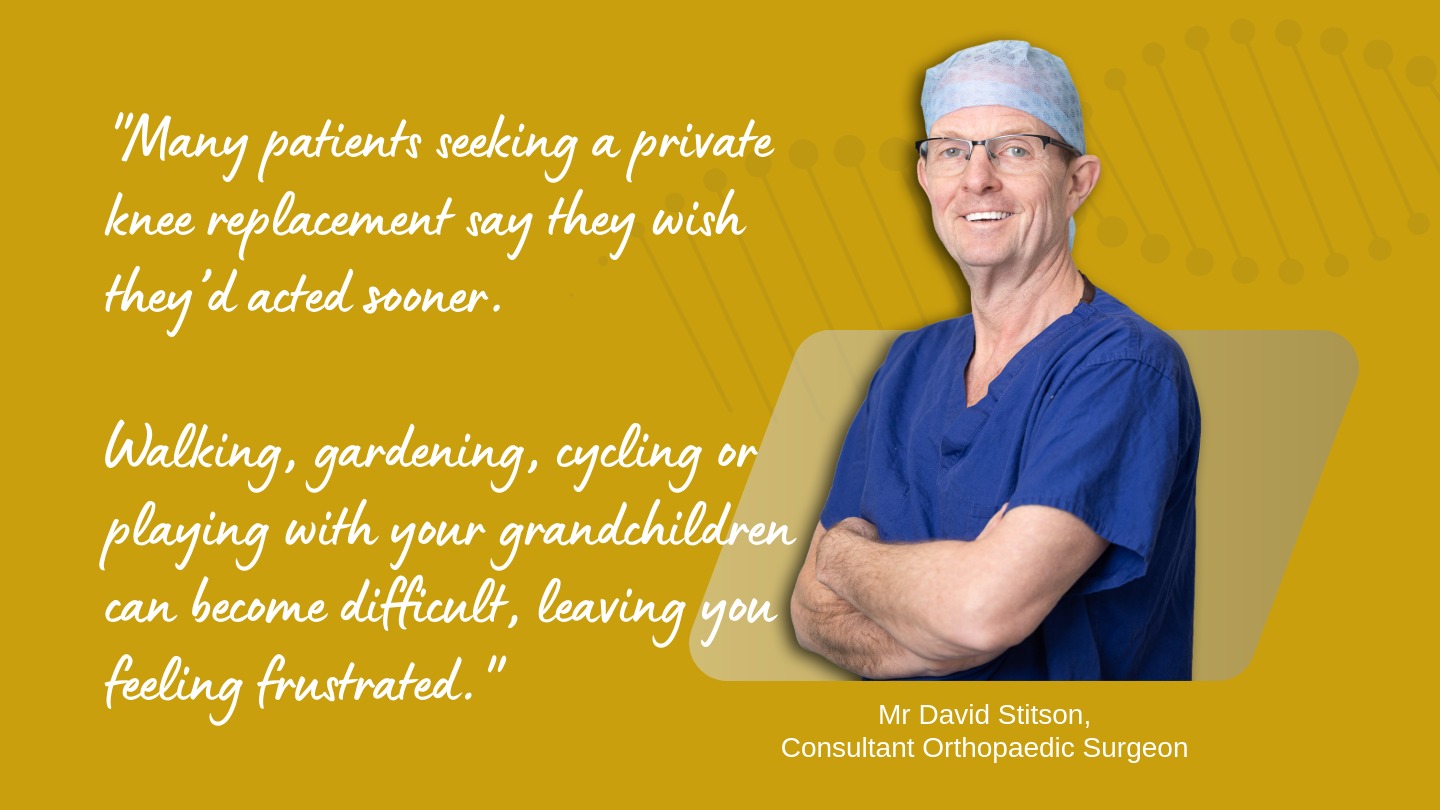
“If your knee pain has lasted more than a few weeks, keeps you awake at night or is limiting the things you enjoy doing, it is worth getting a proper diagnosis to assess the situation and plan for your future.”
Quick look at the causes of knee pain
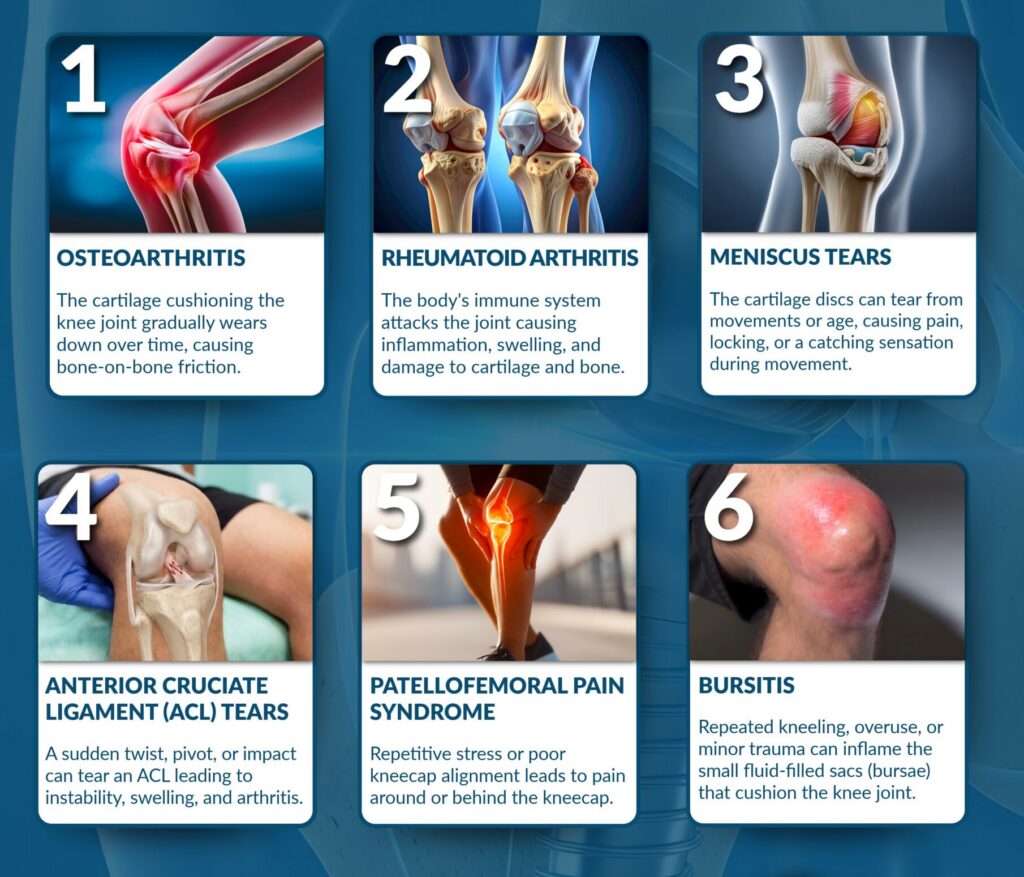
1. Osteoarthritis
By far the most common cause of long-term knee pain, especially in people over 45, osteoarthritis develops as the hyaline cartilage lining the knee joint gradually wears away, leaving bone to rub against bone. It typically causes stiffness, swelling and a deep ache that is worse after activity or first thing in the morning.
Best diagnostic process:
A weight-bearing X-ray is the gold standard, as it shows joint space narrowing, bone spurs and the overall alignment of the knee under load. In borderline or early cases, an MRI scan can pick up cartilage thinning that hasn’t yet shown up on X-ray.
Best procedure:
Mild to moderate cases often respond well to physiotherapy, weight management and corticosteroid injections. Once the joint is significantly worn and conservative treatment stops helping, a partial or total knee replacement typically offers reliable long-term relief and restoration of function.
2. Gout and Inflammatory Arthritis
Sudden, intense knee pain accompanied by redness, warmth, and swelling can point to gout, pseudogout or other inflammatory conditions such as rheumatoid arthritis, where the body’s immune system or crystal build-up attacks the joint.
Best diagnostic process:
Blood tests (checking uric acid and inflammatory markers) combined with joint fluid aspiration and analysis under a microscope confirm the diagnosis definitively.
Best procedure:
These conditions are managed medically rather than surgically in the first instance — anti-inflammatory medication, urate-lowering therapy for gout, or disease-modifying drugs for rheumatoid arthritis. Surgery is only considered if joint damage becomes severe over time.
3. Meniscal Tears
The meniscus is the C-shaped cartilage that cushions and stabilises the knee. There are two in each knee, medial and lateral. Tears can happen from a sudden twisting injury in younger, active people or gradually degenerate with age. Symptoms include a locking or catching sensation, swelling and pain along the joint line.
Best diagnostic process:
MRI is by far the most effective tool for visualising meniscal tears, showing their exact location, size and pattern far more clearly than X-ray, which only shows bone.
Best procedure:
Small, stable tears often resolve with physiotherapy alone. Tears that cause locking, catching or persistent pain are usually treated with arthroscopic (keyhole) surgery, either via a partial meniscectomy to trim the damaged section or, where possible, a meniscal repair to preserve as much natural tissue as possible.

4. Ligament Injuries (ACL, MCL, PCL)
Ligament injuries, particularly to the anterior cruciate ligament (ACL), are common in sports involving sudden stops, pivots, or direct impact. They often cause an audible “pop,” immediate swelling and a feeling that the knee is unstable or “giving way.”
Best diagnostic process:
Clinical examination (such as the Lachman test) combined with MRI gives the clearest picture, confirming which ligament is affected and the severity of the tear.
Best procedure:
Partial tears and lower-demand patients may do well with bracing and physiotherapy to build supporting muscle strength. Complete tears, especially in active or younger patients, are often treated with ACL reconstruction surgery using a tendon graft to restore stability.
5. Patellofemoral Pain Syndrome
Often called “runner’s knee,” this involves pain around or behind the kneecap, caused by poor tracking of the patella within its groove. It is especially common in runners, cyclists, and people whose knees are under repetitive strain.
Best diagnostic process:
Clinical assessment of kneecap alignment and movement is usually sufficient, though an MRI or CT scan can be used to assess cartilage wear under the kneecap or confirm patellar tracking issues in more complex cases.
Best procedure:
Most cases improve significantly with targeted physiotherapy focused on strengthening the quadriceps and correcting biomechanics. Surgery is rarely needed, but in persistent cases, patella realignment procedures may be considered.
6. Bursitis
Bursitis occurs when the small fluid-filled sacs (bursae) that cushion the knee joint become inflamed, often from repetitive kneeling or minor trauma. It causes localised swelling and tenderness, usually at the front of the knee.
Best diagnostic process:
Ultrasound is highly effective for identifying fluid build-up within the bursa and distinguishing it from other causes of swelling.
Best procedure:
Rest, ice and anti-inflammatory medication resolve most cases. Persistent or infected bursitis may require aspiration (draining the fluid) or, occasionally, surgical removal of the bursa.
7. Tendinitis
Overuse of the tendons around the knee, particularly the patellar tendon (“jumper’s knee”), causes localised pain just below the kneecap that worsens with activity.
Best diagnostic process:
Ultrasound is excellent for visualising tendon thickening, tears, or degeneration in real time, and can be done quickly in clinic.
Best procedure:
The vast majority of cases respond well to a structured physiotherapy programme (particularly eccentric strengthening exercises), activity modification and sometimes shockwave therapy. Surgery is reserved for the small minority of cases that fail to improve after several months of conservative treatment.
When Rest Isn’t Enough to relieve your knee pain
If your knee pain has lasted more than a few weeks, keeps you awake at night or is limiting the things you enjoy doing, it is worth getting a proper diagnosis rather than continuing to push through it. The right imaging, whether a weight-bearing X-ray, an MRI, or an ultrasound, makes all the difference in identifying exactly what is driving the pain, so that treatment can be accurately targeted.
Mr David Stitson, Consultant Orthopaedic Surgeon, private hip and knee assessment, rapid diagnosis and a full range of treatment options from injections and arthroscopic surgery through to hip and knee replacement at the Nuffield Hospital in Plymouth, helping patients get back to the activities they love as quickly and safely as possible.
Are you ready to Take the Next Steps to improve your mobility? Book Your Private Knee Consultation with David Stitson
If knee pain is holding you back from the life you want, whether that’s walking the coast path, keeping up with grandchildren, or simply a good night’s sleep, the first step is a conversation. There is no obligation and no need for a GP referral to get started.
Living with constant knee pain is not something you have to accept as part of ageing. Many people in their 50s, 60s and 70s find that a private knee replacement restores their mobility and transforms their quality of life.
To discuss your symptoms and explore whether knee replacement surgery is the right option for you, contact Mr David Stitson, Consultant Orthopaedic Surgeon, at the Nuffield Hospital, Plymouth.
- Call: 01752 761818
- Visit: www.orthopaedicsplymouth.co.uk
- Email: enquiries@orthopaedicsplymouth.co.uk
Take the first step towards a more comfortable, active life today.
Is it time to see a Knee specialist? Get Private Orthopaedic Surgery in Plymouth in just 4-6 weeks
⇒ Consultation in 7 days or less
⇒ Consultation to surgery, 4-6 weeks
The Nuffield Plymouth CQC Rating
The Nuffield Hospital has a history that spans over half a century and has built a reputation for high standards of care, professionalism and expertise in delivering health services. They aim for continuous quality improvement in everything they do.
Active Quality and Governance programmes are in place at the Nuffield Hospital Plymouth. As part of this, the hospital is inspected by independent healthcare regulators to ensure it meets the fundamental standards of quality and safety as determined by the regulating body (CQC).
In the most recent inspection, Plymouth Nuffield Hospital was rated as ‘Good’ overall, however, the surgical element of the inspection was rated as ‘Outstanding’. The hospital was referred to as:
“Outstanding in effective and caring, and
Good in safe, responsive and well-led.”