Consultant Orthopaedic Surgeon, Mr David Stitson, Explains All
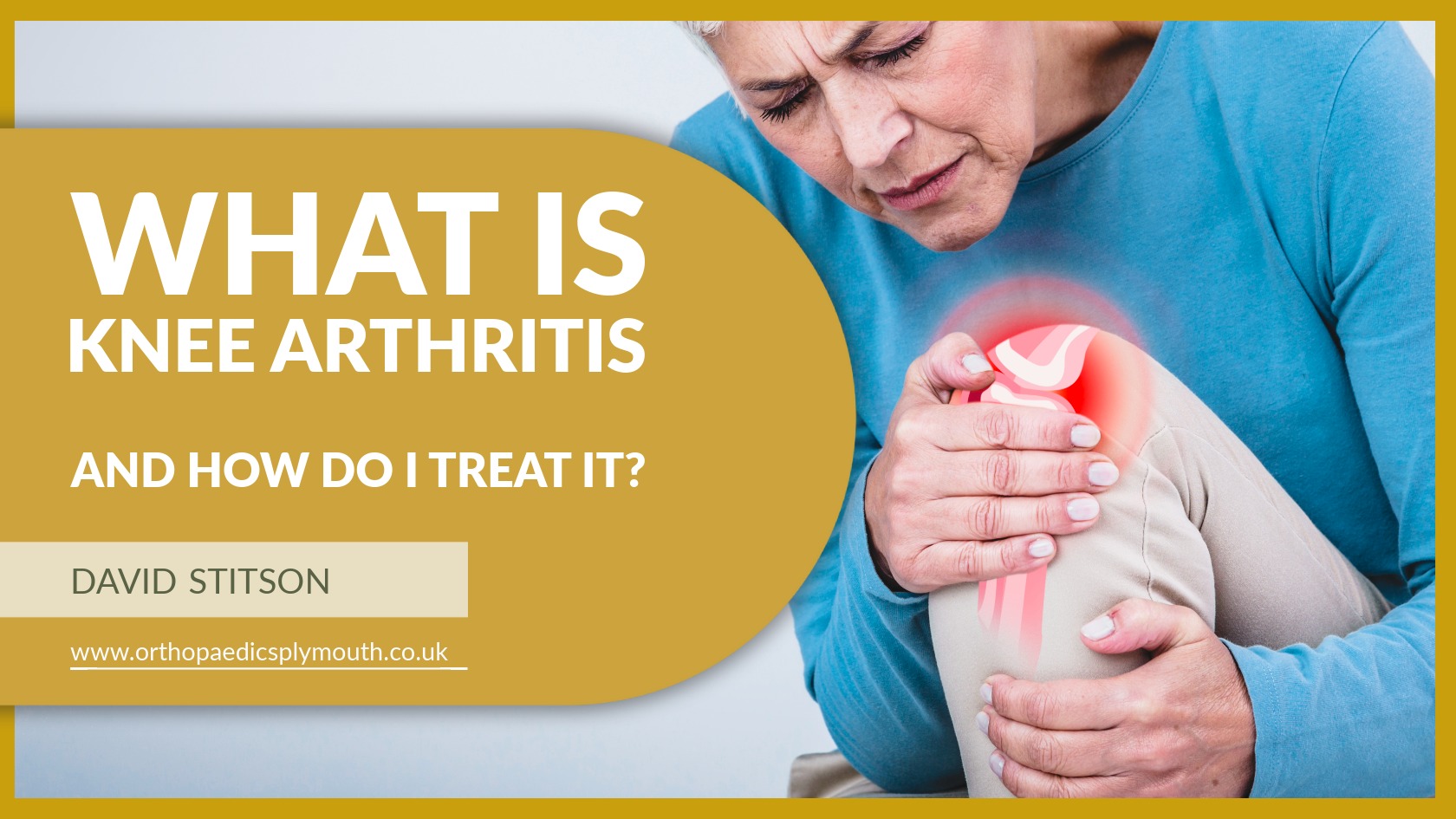
Knee pain is one of the most common reasons people seek advice from an orthopaedic surgeon and arthritis is very often the cause.
Contents
ToggleAs a Consultant Orthopaedic Surgeon specialising in private hip and knee surgery at the Nuffield Hospital in Plymouth, Mr David Stitson sees patients every week who are unsure exactly what is happening inside their knee and what can be done about it.
This guide explains what knee arthritis is, the other conditions that commonly cause knee pain and the treatment options available.
“Arthritis develops when the cartilage becomes damaged, thinned or worn away, causing the bones underneath to rub together. This leads to pain, stiffness, swelling and a gradual loss of movement in the joint.”
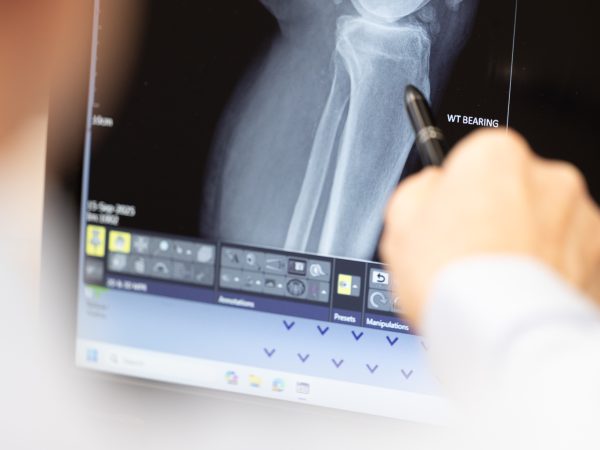
What Is Knee Arthritis?
Arthritis simply means inflammation of a joint and the knee is one of the joints most frequently affected.
Inside a healthy knee, the ends of the thigh bone (femur), shin bone (tibia) and kneecap (patella) are covered in smooth hyaline cartilage that allows the bones to glide over one another with minimal friction.
Arthritis develops when this cartilage becomes damaged, thinned or worn away, causing the bones underneath to rub together. This leads to pain, stiffness, swelling and a gradual loss of movement in the joint.
There are 3 main types of arthritis that can affect the knee:
1. Osteoarthritis (OA)
This is by far the most common form of knee arthritis. It is a “wear and tear” condition in which cartilage breaks down gradually over time, often as a result of ageing, previous injury, excess weight or repetitive strain. Symptoms typically develop slowly and include:
- Pain that worsens with activity and improves with rest
- Stiffness, particularly first thing in the morning or after sitting for a while
- Swelling around the joint
- A grinding or clicking sensation when moving the knee
- Reduced range of motion over time
2. Rheumatoid Arthritis (RA)
Unlike osteoarthritis, rheumatoid arthritis is an autoimmune condition in which the body’s immune system mistakenly attacks the lining of the joints. It tends to affect both knees at once, can occur at a younger age and often comes with more pronounced swelling, warmth and morning stiffness lasting longer than 30 minutes.
3. Post-Traumatic Arthritis
This form of arthritis develops after a significant knee injury, such as a fracture, ligament tear or dislocation. Even years after the original injury has healed, damage to the cartilage can lead to ‘seondary’ arthritis developing in the joint later in life.
Other Conditions That Cause Knee Pain
Arthritis is a leading cause of knee pain, but it isn’t the only one. Mr Stitson often assesses patients for the following conditions, some of which can occur alongside arthritis:
- Meniscal Tears – The meniscus is a piece of fibro-cartilage that acts as a shock absorber between the femur and tibia. Tears can happen suddenly during sport or gradually through degeneration, causing pain, swelling and a sensation of the knee locking or giving way.
- Ligament Injuries – Damage to the ACL, PCL, MCL or LCL (the main stabilising ligaments of the knee) often occurs during sporting activities and can cause instability, swelling and difficulty bearing weight.
- Patellofemoral Pain Syndrome – Pain around or behind the kneecap, often linked to muscle imbalance, overuse or alignment issues and common in younger, active patients.
- Bursitis – Inflammation of the small fluid-filled sacs (bursae) that cushion the knee joint, often caused by repetitive kneeling or overuse, leading to localised swelling and tenderness.
Gout and Other Crystal - Arthropathies – A build-up of uric acid crystals in the joint can cause sudden, severe episodes of pain, redness and swelling, sometimes mistaken for infection or a flare of arthritis.
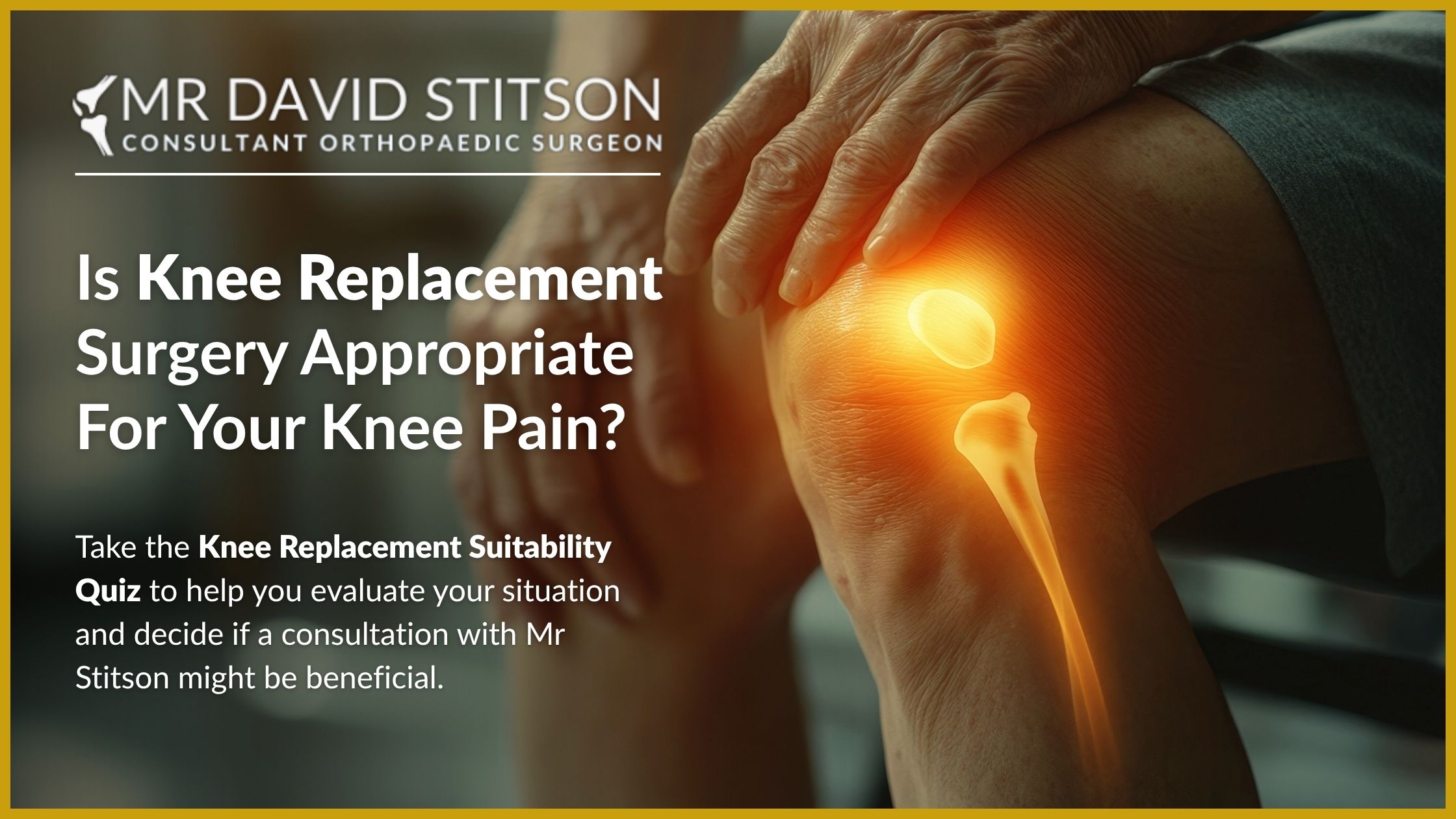
Recommended Procedures and Treatments to Relieve Knee Arthritis
Treatment is always tailored to the individual, taking into account the underlying condition, severity of symptoms, activity level and overall health. Options Mr Stitson may discuss include:
Non-Surgical Approaches
- Physiotherapy to strengthen the muscles supporting the knee and improve flexibility
- Weight management to reduce load on the joint
- Activity modification and use of walking aids where appropriate
- Pain relief and anti-inflammatory medication
- Steroid injections to reduce inflammation and ease symptoms
Surgical Options
When non-surgical treatment no longer provides adequate relief, surgical options may be considered:
- Arthroscopy – A minimally invasive “keyhole” procedure used to investigate and treat certain issues such as meniscal tears, using small incisions and a camera to guide treatment.
- Partial Knee Replacement (Unicompartmental) – Suitable for patients whose arthritis is confined to one part of the knee, replacing only the damaged compartment while preserving healthy bone and ligaments.
- Total Knee Replacement – For more widespread arthritis, the damaged joint surfaces are replaced with an artificial implant, relieving pain and restoring function for the vast majority of patients.
- Revision Knee Surgery – For patients who have previously had knee replacement surgery and require further treatment due to wear, loosening or other complications.
Getting the Right Diagnosis for your Knee Pain
Because several conditions can cause similar symptoms, an accurate diagnosis is the essential first step. Mr Stitson offers private consultations at the Nuffield Hospital in Plymouth, with rapid access to diagnostic imaging. This leads onto a personalised treatment plan designed around each patient’s specific needs and goals, helping them to get back to the activities they love as quickly and safely as possible.
If you are experiencing persistent knee pain and would like an expert assessment, book a private consultation with Mr David Stitson to discuss your symptoms and explore the treatment options best suited to you.
Are you ready to Take the Next Steps to improve your mobility? Book Your Private Knee Consultation with David Stitson
If knee pain is holding you back from the life you want, whether that’s walking the coast path, keeping up with grandchildren, or simply a good night’s sleep, the first step is a conversation. There is no obligation and no need for a GP referral to get started.
Living with constant knee pain is not something you have to accept as part of ageing. Many people in their late 60s and 70s find that a private knee replacement restores their mobility and transforms their quality of life.
To discuss your symptoms and explore whether knee replacement surgery is the right option for you, contact Mr David Stitson, Consultant Orthopaedic Surgeon, at the Nuffield Hospital, Plymouth.
- Call: 01752 761818
- Visit: www.orthopaedicsplymouth.co.uk
- Email: enquiries@orthopaedicsplymouth.co.uk
Take the first step towards a more comfortable, active life today.
Take the Next Step…
If joint pain is stopping you from doing the things you love, book a consultation with Mr Stitson to discuss your options.
– Consult Your GP: If you are experiencing joint pain and are considering surgery, start by booking an appointment with your GP. They will be able to refer you to a specialist if needed.
– Understand Your Options: There are the key avenues you can explore to speed up your access to joint surgery contributing to a swifter recovery and getting you back on your feet sooner.
– Do Your Research: Familiarise yourself with different types of joint replacement procedures and what each one involves.
– Speak with Mr Stitson: Book a consultation with David Stitson, a consultant orthopaedic surgeon based in Plymouth, to discuss what might be the best approach for you personally. He will provide detailed information specific to your situation.
– A consultation helps you understand:
- What is causing your pain
- Whether joint surgery is appropriate
- Alternatives to surgery
- Expected recovery and outcomes
Surgery may sound daunting, but for many, it provides much-needed relief and the chance to regain mobility. This step can be pivotal in improving your quality of life, helping to reduce pain and stiffness in your hip or knee, dramatically.
By addressing the underlying issues, joint surgery can pave the way for a more active lifestyle, allowing you to return to the activities you love without the constant concern of hip or knee pain holding you back.
Taking action now may help you regain confidence, mobility and quality of life.
Is it time to see a Knee specialist? Get Private Orthopaedic Surgery in Plymouth in just 4-6 weeks
⇒ Consultation in 7 days or less
⇒ Consultation to surgery, 4-6 weeks
About Knee Surgery
Knee replacement surgery replaces the worn out, painful and stiff knee joint with a new prosthetic joint. This procedure which may be a partial or a total replacement is normally performed under spinal anaesthesia and is usually followed by a night or two in the hospital. Day-case knee replacement surgery may be an appropriate option for you.
About Mr Stitson
David Stitson is a Plymouth-based Consultant Trauma and Orthopaedic Surgeon. Trained both in the UK and internationally, he has worked in medicine for more than 20 years for the NHS, for the Royal Air Force and in private practice. Mr Stitson operates privately at the Nuffield Health Hospital, Plymouth.

Are you ready to Take the Next Steps to improve your mobility?
Living with constant joint pain is not something you have to accept as part of ageing. Many people in their late 60s and 70s find that a private joint replacement restores their mobility and transforms their quality of life.
📞 To discuss your symptoms and explore whether joint replacement surgery is the right option for you, contact Mr David Stitson, Consultant Orthopaedic Surgeon, at the Nuffield Hospital, Plymouth.
- Call: 01752 761818
- Visit: www.orthopaedicsplymouth.co.uk
- Email: enquiries@orthopaedicsplymouth.co.uk
Take the first step towards a more comfortable, active life today.
The Nuffield Plymouth CQC Rating
The Nuffield Hospital has a history that spans over half a century and has built a reputation for high standards of care, professionalism and expertise in delivering health services. They aim for continuous quality improvement in everything they do.
Active Quality and Governance programmes are in place at the Nuffield Hospital Plymouth. As part of this, the hospital is inspected by independent healthcare regulators to ensure it meets the fundamental standards of quality and safety as determined by the regulating body (CQC).
In the most recent inspection, Plymouth Nuffield Hospital was rated as ‘Good’ overall, however, the surgical element of the inspection was rated as ‘Outstanding’. The hospital was referred to as:
“Outstanding in effective and caring, and
Good in safe, responsive and well-led.”