Hip pain is one of the most common reasons people seek advice from an orthopaedic specialist.
It can develop gradually, from everyday wear and tear, or appear suddenly following an injury. Because the hip is a large weight-bearing joint surrounded by muscles, tendons and ligaments, pain in this area can have several different causes, and getting the right diagnosis is the first step towards effective treatment.
Contents
ToggleThis guide explains the most common hip pain causes and outlines the treatment options available, from simple lifestyle changes through to surgery.
Hip pain is one of the most common reasons people seek advice from an orthopaedic specialist. Getting the right diagnosis is the first step towards effective treatment to relieve your hip pain.
When to Seek Specialist Advice for your hip pain
- Hip pain that persists for more than a few weeks despite rest
- Pain that limits your ability to walk, work, or sleep
- Sudden, severe pain following a fall or injury
- Stiffness that is progressively reducing your range of movement
8 Common Hip Pain Causes
1. Osteoarthritis (Hip Wear and Tear)
Osteoarthritis is the most frequent cause of hip pain, particularly in people over 50. It occurs when the smooth cartilage that cushions the hip joint gradually wears away, leading to bone rubbing against bone. This causes stiffness, aching and reduced range of movement. Symptoms are often worse first thing in the morning, after periods of rest or after certain activity.2. Hip Labral Tears
The labrum is a ring of cartilage that lines the hip socket, helping to keep the joint stable. A tear can result from injury, repetitive movement (common in sports), or underlying joint abnormalities such as femoro-acetabular impingement. Symptoms often include a catching or locking sensation, along with pain in the groin. Labral tears are also encountered alongside osteoarthritis, when the tear would be considered degenerate and therefore part of the degenerative process in the joint.3. Trochanteric Bursitis
Bursitis develops when the small fluid-filled sacs (bursae) that cushion the hip become inflamed, often from repetitive movement or direct pressure. It typically causes tenderness and pain on the outer hip, which can be sharp when lying on the affected side.4. Tendinitis
Overuse of the muscles around the hip — particularly the gluteal or iliopsoas tendons — can lead to inflammation and pain. This is common in runners and people who have recently increased their activity levels.5. Femoroacetabular Impingement (FAI)
FAI occurs when extra bone growth causes the ball and socket of the hip to fit together imperfectly, leading to friction during movement. Over time, this can damage the joint and contribute to early osteoarthritis if left untreated.6. Avascular Necrosis
This less common but serious condition occurs when the blood supply to the head of the femur is disrupted, causing bone tissue to die. It can lead to significant pain and, if untreated, collapse of the joint surface.7. Fractures
Hip fractures are most common in older adults with reduced bone density (osteoporosis) and usually follow a fall. They cause sudden, severe pain and an inability to bear weight, and require urgent medical attention.8. Referred Pain
Not all hip pain originates in the hip itself. Conditions affecting the lower back or spine, such as sciatica, can refer pain into the hip and thigh, which is why an accurate diagnosis is so important.
Hip Pain Treatment Options
Conservative (Non-Surgical) Treatment
- Physiotherapy: often the first approach, focused on strengthening the muscles supporting the hip and improving flexibility
- Weight management: carrying excess weight increases load on the hip joint, so even modest weight loss can ease symptoms
- Anti-inflammatory medication: over-the-counter or prescribed medication can help control pain and swelling
- Activity modification: adjusting exercise routines to reduce high-impact activity while maintaining mobility
Injections
- Corticosteroid injections: can provide short-term relief from inflammation, particularly for bursitis or early-stage arthritis
- Hyaluronic acid injections: sometimes used to improve joint lubrication in mild to moderate osteoarthritis
Surgical Treatment
- Hip arthroscopy: a minimally invasive procedure to repair labral tears or address impingement
- Hip resurfacing: an alternative to full replacement for some younger, active patients with osteoarthritis
- Total hip replacement: recommended when conservative treatment no longer manages symptoms effectively; one of the most successful procedures in orthopaedic surgery, with excellent long-term outcomes.
Getting an Accurate Diagnosis
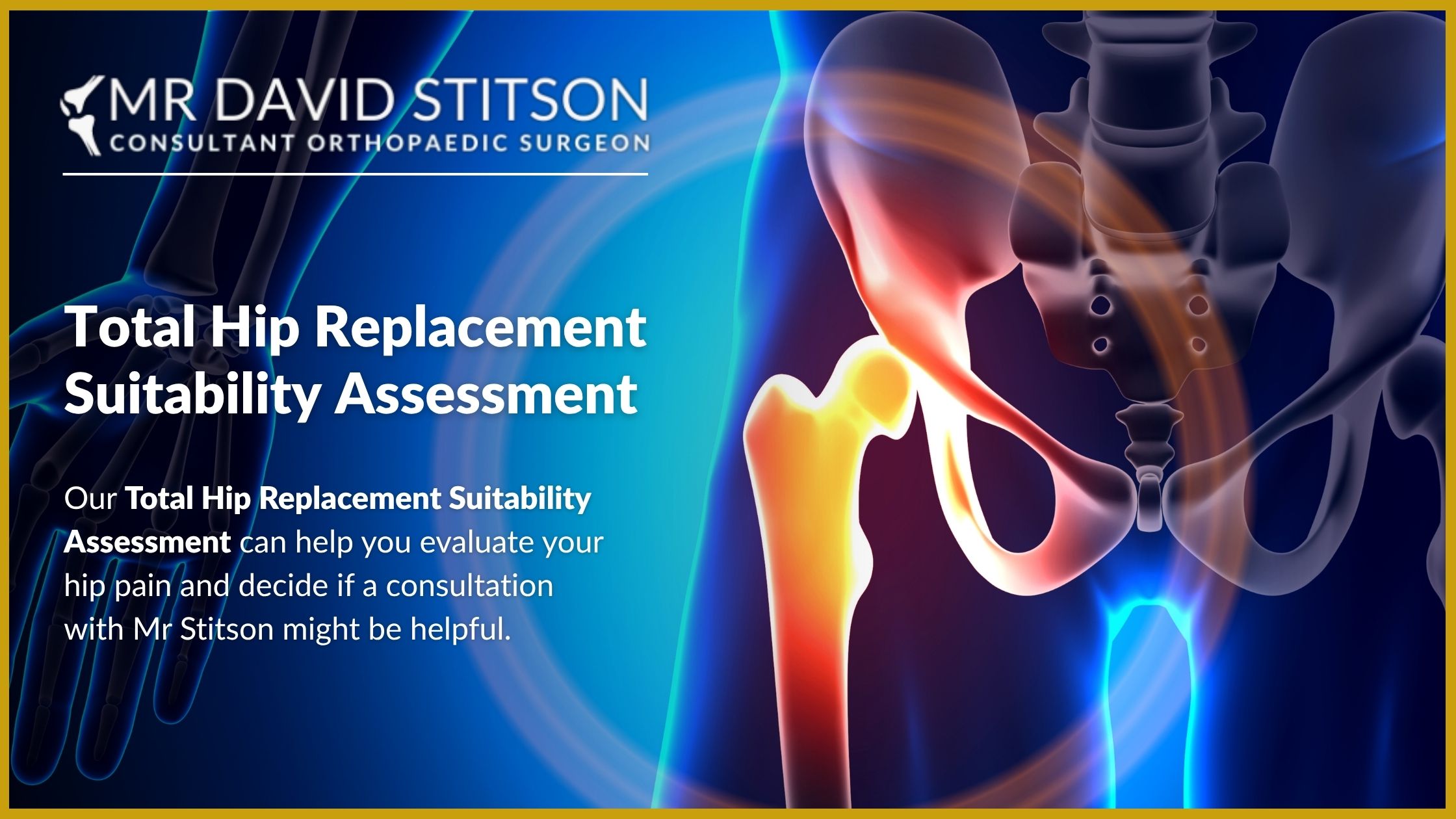
Because several conditions can cause similar symptoms, an accurate diagnosis is essential before starting treatment. This typically involves a physical examination, a discussion of your symptoms and medical history and imaging such as X-ray or MRI where needed.
If you are experiencing persistent or worsening hip pain, Mr David Stitson at Nuffield Health, Plymouth Hospital offers thorough assessment and a full range of treatment options, from conservative management through to surgery, tailored to your individual needs.
Take the Next Step…
If joint pain is stopping you from doing the things you love, book a consultation with Mr Stitson to discuss your options.
– Consult Your GP: If you are experiencing joint pain and are considering surgery, start by booking an appointment with your GP. They will be able to refer you to a specialist if needed.
– Understand Your Options: There are the key avenues you can explore to speed up your access to joint surgery contributing to a swifter recovery and getting you back on your feet sooner.
– Do Your Research: Familiarise yourself with different types of joint replacement procedures and what each one involves.
– Speak with Mr Stitson: Book a consultation with David Stitson, a consultant orthopaedic surgeon based in Plymouth, to discuss what might be the best approach for you personally. He will provide detailed information specific to your situation.
– A consultation helps you understand:
- What is causing your pain
- Whether joint surgery is appropriate
- Alternatives to surgery
- Expected recovery and outcomes
Surgery may sound daunting, but for many, it provides much-needed relief and the chance to regain mobility. This step can be pivotal in improving your quality of life, helping to reduce pain and stiffness in your hip or knee, dramatically.
By addressing the underlying issues, joint surgery can pave the way for a more active lifestyle, allowing you to return to the activities you love without the constant concern of hip or knee pain holding you back.
Taking action now may help you regain confidence, mobility and quality of life.
Get Private Orthopaedic Surgery in Plymouth in just 4-6 weeks
⇒ Consultation in 7 days or less
⇒ Consultation to surgery, 4-6 weeks
About Hip Surgery
Total hip replacement surgery replaces the worn-out painful and stiff hip joint with a new prosthetic joint. This procedure is normally performed under spinal anaesthesia and is commonly followed by a night or two in the hospital. Day-case hip replacement surgery may be an appropriate option for you.

About Mr Stitson
David Stitson is a Plymouth-based Consultant Trauma and Orthopaedic Surgeon. Trained both in the UK and internationally, he has worked in medicine for more than 20 years for the NHS, for the Royal Air Force and in private practice. Mr Stitson operates privately at the Nuffield Health Hospital, Plymouth.

Are you ready to Take the Next Steps to improve your mobility?
Living with constant joint pain is not something you have to accept as part of ageing. Many people in their late 60s and 70s find that a private joint replacement restores their mobility and transforms their quality of life.
📞 To discuss your symptoms and explore whether joint replacement surgery is the right option for you, contact Mr David Stitson, Consultant Orthopaedic Surgeon, at the Nuffield Hospital, Plymouth.
- Call: 01752 761818
- Visit: www.orthopaedicsplymouth.co.uk
- Email: enquiries@orthopaedicsplymouth.co.uk
Take the first step towards a more comfortable, active life today.
The Nuffield Plymouth CQC Rating
The Nuffield Hospital has a history that spans over half a century and has built a reputation for high standards of care, professionalism and expertise in delivering health services. They aim for continuous quality improvement in everything they do.
Active Quality and Governance programmes are in place at the Nuffield Hospital Plymouth. As part of this, the hospital is inspected by independent healthcare regulators to ensure it meets the fundamental standards of quality and safety as determined by the regulating body (CQC).
In the most recent inspection, Plymouth Nuffield Hospital was rated as ‘Good’ overall, however, the surgical element of the inspection was rated as ‘Outstanding’. The hospital was referred to as:
“Outstanding in effective and caring, and
Good in safe, responsive and well-led.”