Deciding on whether to opt for a NHS or a private knee replacement in Plymouth can feel overwhelming. Each path has its pros’s and con’s and making an informed decision is crucial.
Contents
ToggleOn one hand, the NHS offers a cost-effective solution that is accessible to all. But, it might come with longer waiting times due to high demand.
On the other hand, choosing a private knee replacement can mean speedier surgery dates and more personalised care—albeit at a cost.
Here’s what you should consider:
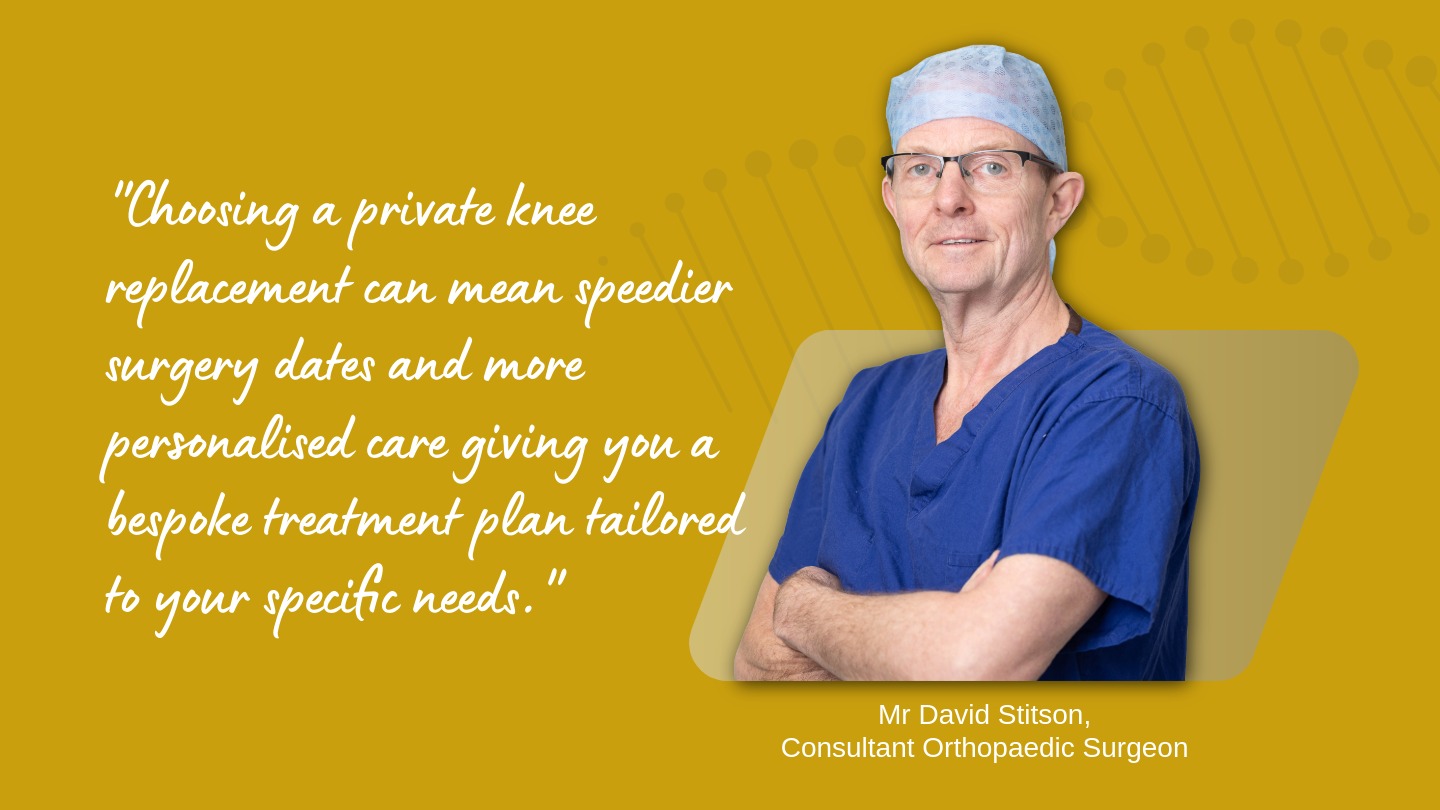
Choosing a private knee replacement with David Stitson can mean speedier surgery dates and more personalised care.
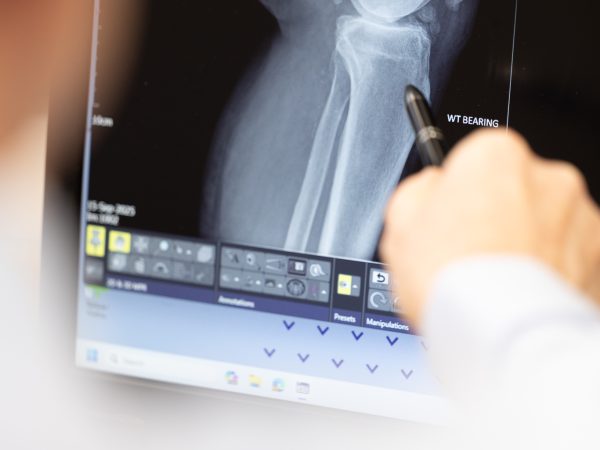
Things to Consider:
-
Waiting Times: NHS might involve longer wait times, while private services could get you into surgery faster.
-
Cost: NHS services are generally free of charge, whereas private knee replacements can be pricey. However, this can be mitigated by the finance options we offer.
-
Care and Comfort: Private facilities might offer a more personalised environment, enhancing your comfort during the procedure and recovery.
Understanding Your Knee Replacement
What is a Knee Replacement?
Knee replacement, often referred to as knee arthroplasty, is a surgical procedure designed to replace the weight-bearing surfaces of the knee joint. This operation is usually performed to relieve pain and disability.
The process involves removing damaged cartilage and bone from the surface of the knee and replacing it with an artificial joint made of metal, plastics, and polymers. Knee replacement can significantly improve mobility and quality of life, particularly for those suffering from chronic knee pain and limited movement.
Common Reasons for Knee Surgery
Knee surgery is often considered when non-surgical treatments have failed to relieve symptoms. Some common reasons for undergoing knee replacement surgery include
Osteoarthritis: This is the most common reason people seek knee replacement. Its wear-and-tear pattern causes pain, swelling and stiffness in the knee.
Rheumatoid Arthritis: An autoimmune condition that leads to inflammation and can damage knee joint cartilage.
Traumatic Arthritis: This occurs after a serious knee injury and can lead to long-term knee problems.
Deformities: Conditions like bow legs or knock knees that cause uneven wear on the joint.
Patients might also consider knee replacement if they experience severe pain that limits everyday activities including walking, climbing stairs or even sitting and standing.
Private Knee Replacement
When you are grappling with ongoing knee pain, your mind might turn to the prospect of knee replacement surgery. While the NHS offers services, private knee replacement surgery is another path worth considering. It provides different options, often with the allure of shorter wait times and personalised care.
Let’s explore the facets of private knee replacement surgery to help determine if it’s the right path for you.
Private Knee Replacement Options
Private knee replacement surgery can take place in different settings, such as private hospitals or specialised orthopaedic clinics. In these facilities, patients often have access to state-of-the-art technology and care from highly-experienced orthopaedic surgeons.
Private care can offer bespoke treatment plans tailored to your specific needs, potentially leading to more personalised recovery programs.
Pros and Cons of Choosing Private Healthcare
Opting for private healthcare comes with its own unique set of advantages. Here are some of the pros:
- Reduced Wait Times: One of the most compelling reasons to go private is the significantly reduced waiting time. You can usually schedule your surgery much sooner (4–6 weeks!) compared to the NHS and at a time to suit you.
- Choice of Surgeon: David Stitson operates privately at the Nuffield Health Hospital, Plymouth. He holds full practice privileges and admitting rights. David will guide you through your treatment journey, taking you from consultation through to convalescence, ensuring you feel confident in him performing your surgery.
- Comfort and Convenience: Private facilities often boast more comfortable amenities. You might find yourself in a private room with en-suite facilities, creating a more pleasant hospital stay.
Despite these benefits, there are downsides:
- Cost: Private healthcare can be expensive, especially without insurance or sufficient savings.
- Access to Specialists: Not every specialist may be available on a private basis, limiting options depending on the particular facility.
Private Knee Replacement Cost Considerations
Cost is a significant factor when considering private knee replacements. Prices can vary widely based on location, the complexity of the surgery, and the chosen hospital or clinic. On average, the cost of a knee replacement in a private hospital in the UK can range from £10,000 to £15,000 or more. It is crucial to verify what is included in the price, such as consultation charges, surgery fees, hospital stay and aftercare.
Some health insurance policies might cover part or all of the expenses, so it’s worth checking your policy details or considering private medical insurance if knee surgery might be in your future.
How to Get Private Knee Surgery in Plymouth in Just 4-6 Weeks
For those residing in or near Plymouth, quickly accessing private orthopaedic surgery is possible. First, start with a consultation with your GP, who can provide referrals to a reputable private orthopaedic specialist.
You can often schedule a preliminary consultation within weeks, and if surgery is appropriate, it can be scheduled within 4 to 6 weeks from your initial consultation. Leveraging local private facilities can lead to an efficient path from consultation to recovery.

NHS Knee Replacement
Overview of NHS Knee Replacement Process
The National Health Service (NHS) provides knee replacement surgery across the UK, prioritising patients based on the severity of their condition. It all begins with a referral from your GP to a community assessment pathway, often involving a period of physiotherapy followed by referral to an orthopaedic specialist if deemed necessary.
After a thorough assessment, which may include X-rays and physical examination, the decision to proceed with surgery is made collaboratively. Once approved, you are placed on a waiting list and undergo pre-operative assessment to ensure you’re fit for surgery. Post-surgery, the NHS offers structured physiotherapy programs to aid recovery.
Pros and Cons of Choosing the NHS for your Knee Replacement
Opting for an NHS knee replacement has its own set of advantages and disadvantages.
Pros:
– Cost: The most significant benefit is the cost, or rather the absence thereof, as the surgery is covered under the NHS.
– Quality of Care: Despite being free, the standard of care is high, with experienced surgeons and access to comprehensive post-operative therapy.
Cons:
– Waiting Times: The primary downside is often the waiting list, which can be lengthy depending on demand.
– Limited Choice: NHS patients generally have less choice in selecting their surgeon or hospital compared to private options.
Waiting Times and Accessibility for a Knee Replacement
Waiting times are one of the most-discussed aspects of NHS services. Depending on your location and the urgency of your condition, the waiting time for a knee replacement through the NHS can range from a few months to over a year.
Urgent cases are prioritised, but this means some patients could face longer delays. The NHS has been working on strategies to reduce these times, but they remain a point of concern for many.
Accessibility isn’t just about time. It also refers to the ability to receive care without financial barriers, making this option accessible to all parts of society. However, if speedy access to surgery is critical, some might consider private alternatives, balancing costs against convenience and rapid treatment options.
Choosing between a private or NHS knee replacement is a personal decision.
It is essential to weigh the specifics of both options, considering factors such as your financial situation, the severity of your condition and desired speed for the surgery. Always consult with healthcare professionals to explore what is best for your unique circumstances.
How to Make the Right Choice for your Knee Replacement
Deciding between private knee surgery and the NHS hinges on your individual needs, preferences and financial situation. If minimising wait times and maximising choice of care are top priorities for you and if you’re financially prepared, private healthcare might offer the advantages you’re looking for.
Comparatively, the NHS provides comprehensive care without the burden of medical bills, albeit sometimes with longer waiting periods.
Assess your personal circumstances, including the urgency of your condition, your budget and your expectations regarding care and comfort. Consulting both NHS and private healthcare professionals can provide valuable insights, ensuring that you make an informed decision tailored specifically to your health and recovery journey.
Seeking Private Orthopaedic Treatment in the South West
For private patients across the Southwest — including Bristol, Bath, Exeter, and the surrounding areas — there are well-established orthopaedic clinics offering rapid access to consultant-led assessment, MRI imaging, and a full range of treatment options without the typical NHS waiting times.
If you are experiencing knee pain, getting an early specialist opinion can help prevent further damage and get you back to your normal activities sooner. A consultation typically starts with a detailed history and examination and your specialist will discuss the most appropriate next steps based on your individual circumstances.
Take the Next Step…
If joint pain is stopping you from doing the things you love, book a consultation with Mr Stitson to discuss your options.
– Consult Your GP: If you are experiencing joint pain and are considering surgery, start by booking an appointment with your GP. They will be able to refer you to a specialist if needed.
– Understand Your Options: There are the key avenues you can explore to speed up your access to joint surgery contributing to a swifter recovery and getting you back on your feet sooner.
– Do Your Research: Familiarise yourself with different types of joint replacement procedures and what each one involves.
– Speak with Mr Stitson: Book a consultation with David Stitson, a consultant orthopaedic surgeon based in Plymouth, to discuss what might be the best approach for you personally. He will provide detailed information specific to your situation.
– A consultation helps you understand:
- What is causing your pain
- Whether joint surgery is appropriate
- Alternatives to surgery
- Expected recovery and outcomes
Surgery may sound daunting, but for many, it provides much-needed relief and the chance to regain mobility. This step can be pivotal in improving your quality of life, helping to reduce pain and stiffness in your hip or knee, dramatically.
By addressing the underlying issues, joint surgery can pave the way for a more active lifestyle, allowing you to return to the activities you love without the constant concern of hip or knee pain holding you back.
Taking action now may help you regain confidence, mobility and quality of life.
Get Private Orthopaedic Surgery in Plymouth in just 4-6 weeks
⇒ Consultation in 7 days or less
⇒ Consultation to surgery, 4-6 weeks
About Knee Surgery
Knee replacement surgery replaces the worn out, painful and stiff knee joint with a new prosthetic joint. This procedure which may be a partial or a total replacement is normally performed under spinal anaesthesia and is usually followed by a night or two in the hospital. Day-case knee replacement surgery may be an appropriate option for you.

About Mr Stitson
David Stitson is a Plymouth-based Consultant Trauma and Orthopaedic Surgeon. Trained both in the UK and internationally, he has worked in medicine for more than 20 years for the NHS, for the Royal Air Force and in private practice. Mr Stitson operates privately at the Nuffield Health Hospital, Plymouth.

Are you ready to Take the Next Steps to improve your mobility?
Living with constant joint pain is not something you have to accept as part of ageing. Many people in their late 60s and 70s find that a private joint replacement restores their mobility and transforms their quality of life.
📞 To discuss your symptoms and explore whether joint replacement surgery is the right option for you, contact Mr David Stitson, Consultant Orthopaedic Surgeon, at the Nuffield Hospital, Plymouth.
- Call: 01752 761818
- Visit: www.orthopaedicsplymouth.co.uk
- Email: enquiries@orthopaedicsplymouth.co.uk
Take the first step towards a more comfortable, active life today.
The Nuffield Plymouth CQC Rating
The Nuffield Hospital has a history that spans over half a century and has built a reputation for high standards of care, professionalism and expertise in delivering health services. They aim for continuous quality improvement in everything they do.
Active Quality and Governance programmes are in place at the Nuffield Hospital Plymouth. As part of this, the hospital is inspected by independent healthcare regulators to ensure it meets the fundamental standards of quality and safety as determined by the regulating body (CQC).
In the most recent inspection, Plymouth Nuffield Hospital was rated as ‘Good’ overall, however, the surgical element of the inspection was rated as ‘Outstanding’. The hospital was referred to as:
“Outstanding in effective and caring, and
Good in safe, responsive and well-led.”