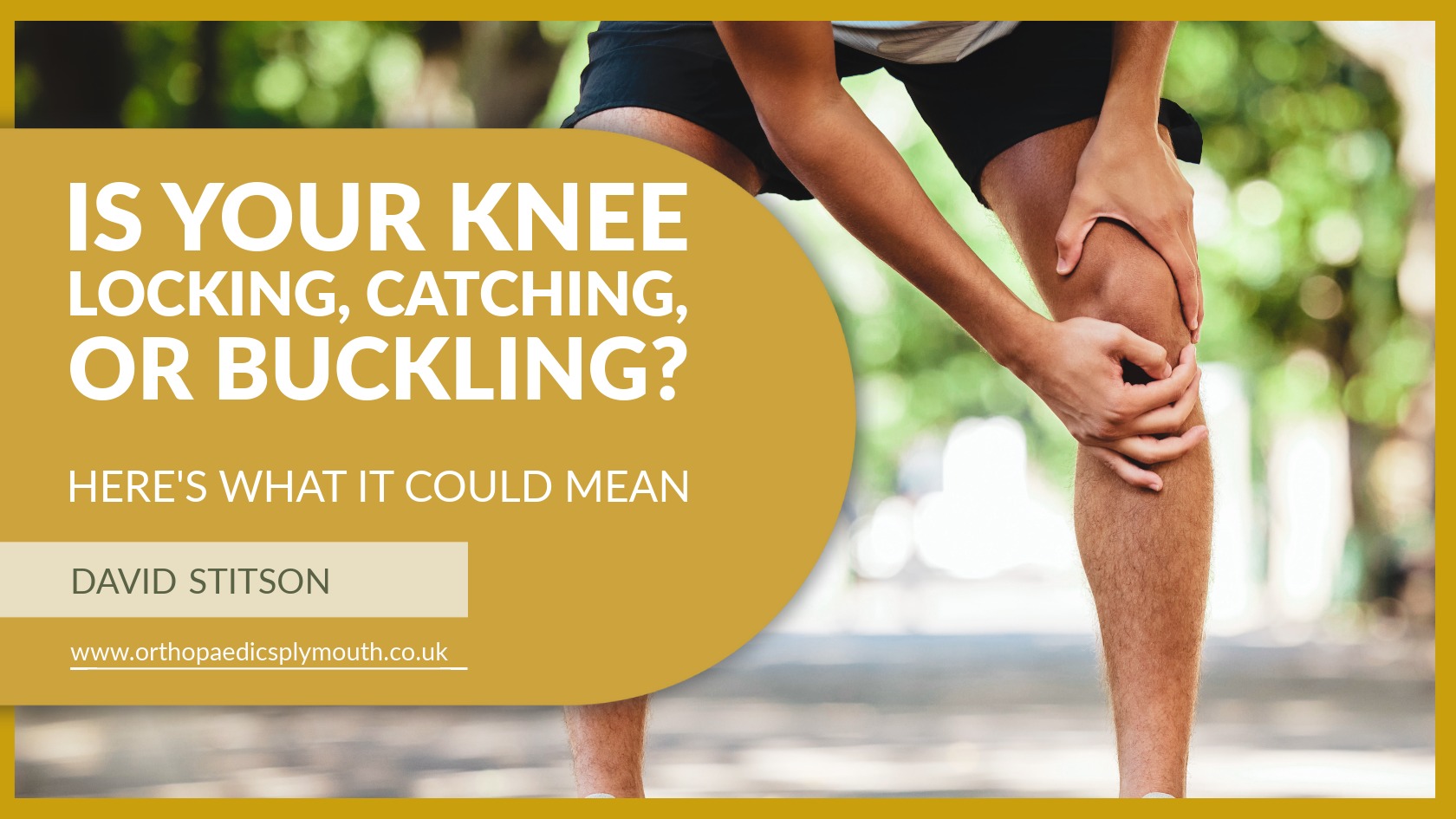
If your knee has started locking up, catching mid-stride, or giving way without warning, it’s natural to feel concerned.
These symptoms are more than just an inconvenience — they are often a sign that something structural inside the joint needs attention.
Contents
ToggleBelow are six common causes of knee pain and how it can be treated.
These symptoms are more than just an inconvenience — they are often a sign that something structural inside the knee joint needs attention. Below are 6 Common Causes of Relentless Knee Pain.
What Do These Symptoms Actually Mean?
Locking is when your knee gets temporarily stuck in one position, usually bent, and you can’t fully straighten or bend it without manoeuvring it back into place.
Catching feels like a brief snag or hesitation during movement, often with a clicking or grinding sensation, as if something inside the joint is briefly getting trapped.
Buckling or giving way is when the knee suddenly feels unstable, as though it can’t bear weight, sometimes causing a stumble or fall.
Common Causes of Relentless Knee Pain
- Meniscal tears are one of the most frequent culprits. The meniscus is the cartilage cushion between your thigh and shin bones. A torn fragment can flip into the joint space and physically block movement, causing locking or catching.
- Loose bodies — small fragments of bone or cartilage that have broken away, often following injury or osteoarthritis — can float around the joint and jam it intermittently.
- Ligament injuries, particularly to the anterior cruciate ligament (ACL), often cause a feeling of instability or buckling, especially during twisting or pivoting movements.
- Patellar instability occurs when the kneecap doesn’t track smoothly in its groove, sometimes partially dislocating and causing a sudden give-way sensation.
- Osteoarthritis can cause catching and locking as the joint surfaces roughen and bony growths (osteophytes) develop, interfering with smooth movement.
- Patellofemoral pain syndrome can also contribute to a sense of weakness or buckling, particularly going up or down stairs.
Why You Shouldn’t Ignore Knee Pain
Repeated locking or buckling can cause further damage to the knee joint surfaces over time, and increases your risk of falls. Identifying the underlying cause early often means simpler, less invasive treatment.
Getting an Accurate Diagnosis
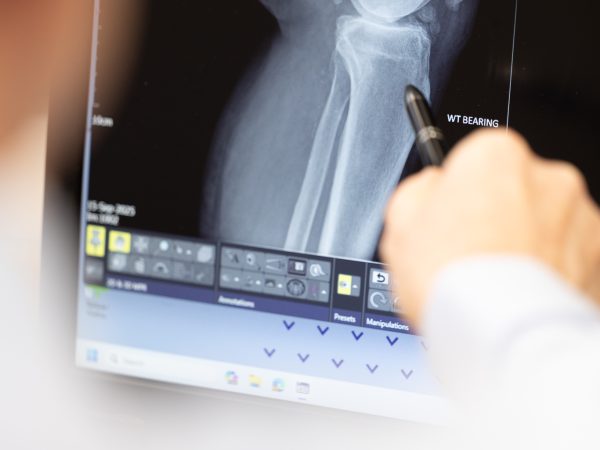
A thorough assessment typically involves a clinical examination to test stability, range of motion, and specific ligament and meniscus tests, followed by imaging. An x-ray will demonstrate the presence of osteoarthritis if present. An MRI scan also a useful tool, as it shows soft tissue structures like the meniscus and ligaments in detail that X-rays don’t capture. X-rays, however, remain useful for assessing joint space narrowing and bony changes associated with arthritis.

6 Treatment Options for Knee Pain
Physiotherapy is often the first step, particularly for instability related to muscle weakness or patellar tracking issues. A tailored strengthening and proprioception programme can significantly improve symptoms.
Activity modification and bracing can help manage symptoms while a longer-term plan is developed, particularly for milder cartilage issues or early arthritis.
Arthroscopic (keyhole) surgery is commonly used to trim or repair a torn meniscus, remove loose bodies or address certain cartilage damage. Recovery from a knee arthroscopy is generally quicker than open surgery, with many patients returning to light activity within a few weeks.
Ligament reconstruction, such as ACL reconstruction, may be recommended if instability is significant, particularly for those wanting to return to sport or physically demanding work.
Realignment procedures can address recurrent patellar instability by correcting how the kneecap tracks.
Knee joint replacement may be considered for advanced osteoarthritis. If the knee is locking, there is instability, accompanied by significant pain and reduced mobility, a total knee replacement may be recommended if conservative measures haven’t helped. A partial knee replacement is an alternative to total knee replacement for some people with osteoarthritis and is limited to a single compartment of the knee.
Seeking Private Orthopaedic Treatment in the South West
For private patients across the Southwest — including Bristol, Bath, Exeter, and the surrounding areas — there are well-established orthopaedic clinics offering rapid access to consultant-led assessment, MRI imaging, and a full range of treatment options without the typical NHS waiting times.
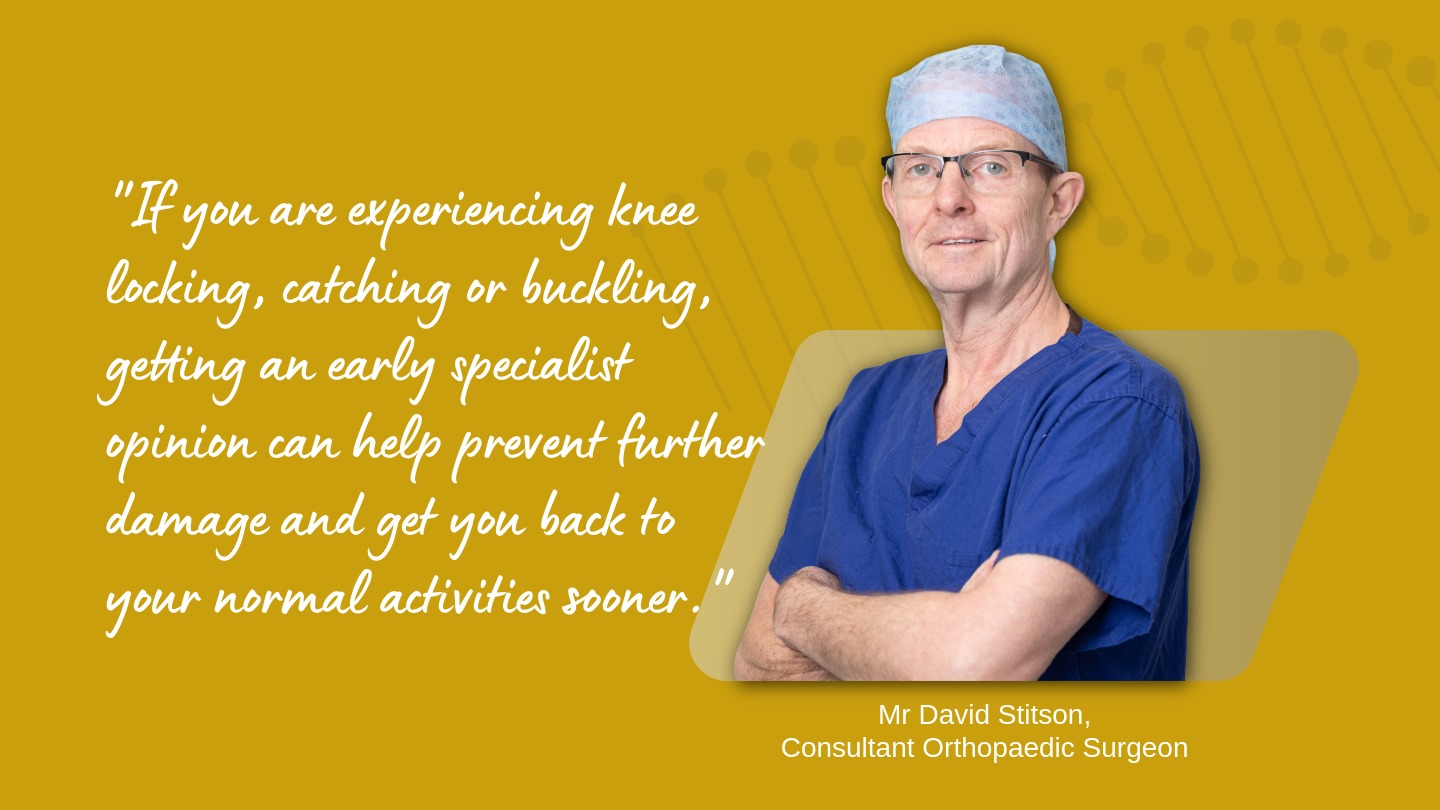
If you are experiencing knee locking, catching or buckling, getting an early specialist opinion can help prevent further damage and get you back to your normal activities sooner. A consultation typically starts with a detailed history and examination and your specialist will discuss the most appropriate next steps based on your individual circumstances.
Take the Next Step…
If joint pain is stopping you from doing the things you love, book a consultation with Mr Stitson to discuss your options.
– Consult Your GP: If you are experiencing joint pain and are considering surgery, start by booking an appointment with your GP. They will be able to refer you to a specialist if needed.
– Understand Your Options: There are the key avenues you can explore to speed up your access to joint surgery contributing to a swifter recovery and getting you back on your feet sooner.
– Do Your Research: Familiarise yourself with different types of joint replacement procedures and what each one involves.
– Speak with Mr Stitson: Book a consultation with David Stitson, a consultant orthopaedic surgeon based in Plymouth, to discuss what might be the best approach for you personally. He will provide detailed information specific to your situation.
– A consultation helps you understand:
- What is causing your pain
- Whether joint surgery is appropriate
- Alternatives to surgery
- Expected recovery and outcomes
Surgery may sound daunting, but for many, it provides much-needed relief and the chance to regain mobility. This step can be pivotal in improving your quality of life, helping to reduce pain and stiffness in your hip or knee, dramatically.
By addressing the underlying issues, joint surgery can pave the way for a more active lifestyle, allowing you to return to the activities you love without the constant concern of hip or knee pain holding you back.
Taking action now may help you regain confidence, mobility and quality of life.
Get Private Orthopaedic Surgery in Plymouth in just 4-6 weeks
⇒ Consultation in 7 days or less
⇒ Consultation to surgery, 4-6 weeks
About Knee Surgery
Knee replacement surgery replaces the worn out, painful and stiff knee joint with a new prosthetic joint. This procedure which may be a partial or a total replacement is normally performed under spinal anaesthesia and is usually followed by a night or two in the hospital. Day-case knee replacement surgery may be an appropriate option for you.

About Mr Stitson
David Stitson is a Plymouth-based Consultant Trauma and Orthopaedic Surgeon. Trained both in the UK and internationally, he has worked in medicine for more than 20 years for the NHS, for the Royal Air Force and in private practice. Mr Stitson operates privately at the Nuffield Health Hospital, Plymouth.

Are you ready to Take the Next Steps to improve your mobility?
Living with constant joint pain is not something you have to accept as part of ageing. Many people in their late 60s and 70s find that a private joint replacement restores their mobility and transforms their quality of life.
📞 To discuss your symptoms and explore whether joint replacement surgery is the right option for you, contact Mr David Stitson, Consultant Orthopaedic Surgeon, at the Nuffield Hospital, Plymouth.
- Call: 01752 761818
- Visit: www.orthopaedicsplymouth.co.uk
- Email: enquiries@orthopaedicsplymouth.co.uk
Take the first step towards a more comfortable, active life today.
The Nuffield Plymouth CQC Rating
The Nuffield Hospital has a history that spans over half a century and has built a reputation for high standards of care, professionalism and expertise in delivering health services. They aim for continuous quality improvement in everything they do.
Active Quality and Governance programmes are in place at the Nuffield Hospital Plymouth. As part of this, the hospital is inspected by independent healthcare regulators to ensure it meets the fundamental standards of quality and safety as determined by the regulating body (CQC).
In the most recent inspection, Plymouth Nuffield Hospital was rated as ‘Good’ overall, however, the surgical element of the inspection was rated as ‘Outstanding’. The hospital was referred to as:
“Outstanding in effective and caring, and
Good in safe, responsive and well-led.”